From chartered vessels to a purpose-built fleet
In the young republic, servicing was improvised: the government contracted private vessels, or leaned on the cutters of the Revenue Cutter Service, as the National Park Service's Historic American Engineering Record documentation of the tender Fir recounts. As the nation's system of aids to navigation grew, that arrangement stopped scaling. In 1840 the first lighthouse tenders of the U.S. Lighthouse Service were introduced, taking over the buoy tending and lighthouse supply work that had previously been performed by chartered vessels under contract or by other government ships — a step the Coast Guard's own mission overview marks as the birth of the type.
Maid of all work
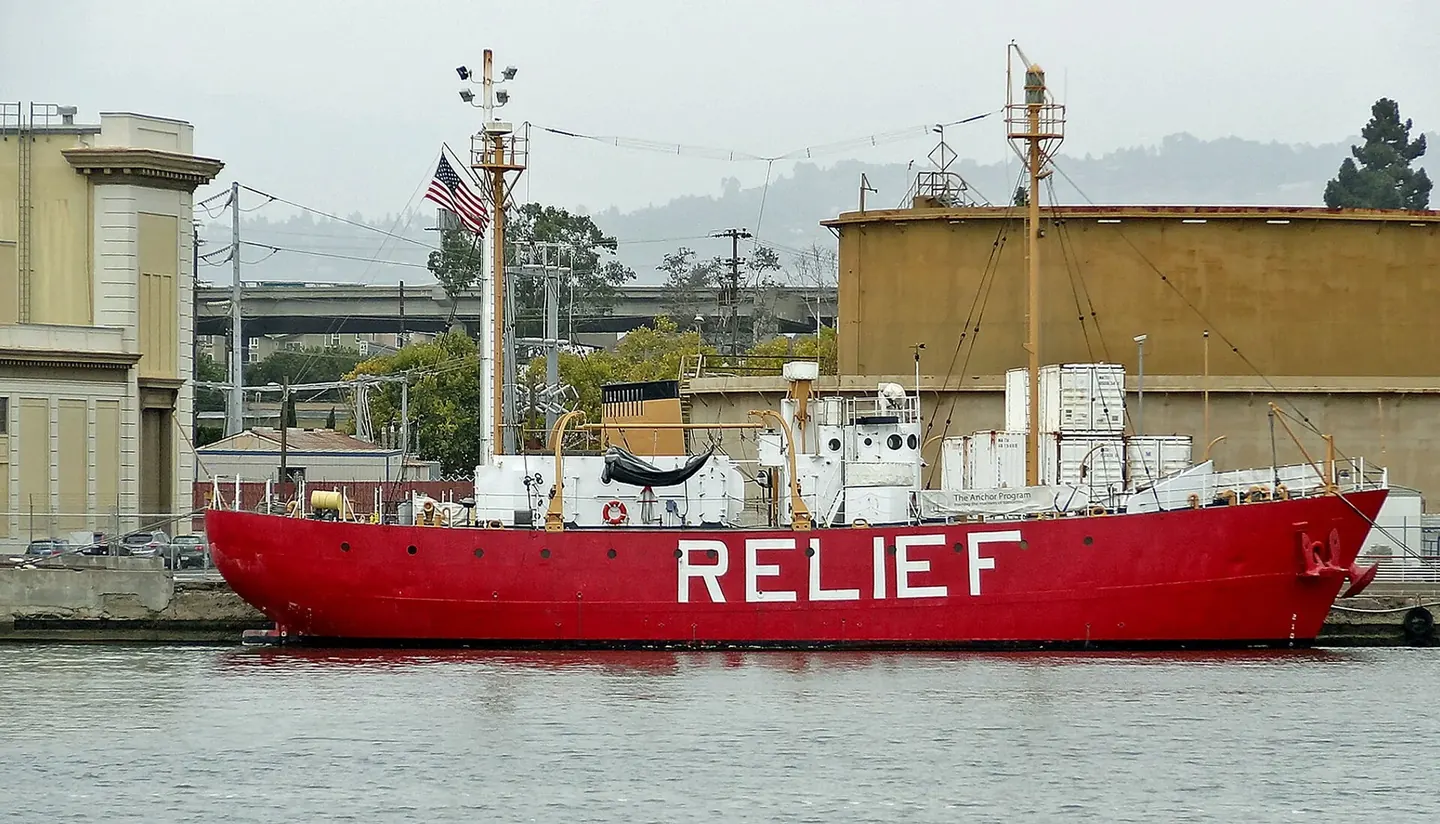
The HAER historians call the tender "maids of all work," and their duty list explains why. Light stations relied on deliveries of replacement parts, paint, oil, coal, wood and other fuel, and general supplies. Keepers had to be delivered to their posts along with their family property, livestock and mail. Lighthouse inspectors and engineers had to be transported, and non-propelled lightships had to be moved on or off their stations — a lightship, after all, could not go anywhere under its own early hulls' power.
Buoy work was the other half of the job, and it never stopped. Buoy maintenance was scheduled on a regular basis, most often annually, interspersed with the unscheduled calls that replace buoys off station, sunk or out of order — the physical half of the correction chain that ends in the pages of the Notice to Mariners. A tender's year was a circular route of its district, and a keeper's year was timed to its appearances; the station logbooks described in a keeper's daily routine record the tender's visit as a recurring event of almost seasonal weight.
Fir: the last of the line
Fir spent her career doing exactly what this article describes: provisioning and servicing light stations across the Pacific Northwest and servicing its buoys — the working loop of a district tender, carried on for half a century. Her preservation is not nostalgia for a dead type so much as an archive: the last physical copy of how an entire system was fed.
Fir: launch, commissioning and institutional transfer
The Coast Guard's vessel history records Fir's launch on 22 March 1939 and Coast Guard commissioning on 1 October 1940. She was launched under the Lighthouse Service and completed under the Coast Guard. The Coast Guard already existed before 1939, and the Lighthouse Service transfer, the ship's launch and its commissioning must be dated separately.
Those are different milestones: the Coast Guard already existed, while the Lighthouse Service transferred to it in 1939. A vessel's launch does not automatically mark entry into commissioned service. Recording the sequence makes Fir's institutional importance clearer without compressing it into a false single-day transition.
Read the deck as a working system
A tender's lifting equipment, working space, storage and small boats support different stages of servicing aids. A crane's stated capacity alone cannot establish that a vessel could safely carry out any lift at that nominal weight under any sea condition. Actual operations require the vessel's approved arrangements and a site-specific plan.
For a historical cargo example, follow a spare component from depot to ship, then from ship to landing and finally to installation. Delivery to the district is not the same event as acceptance at the station. A keeper's log, a manifest and a repair account can describe different points in that chain.
The documentation records alterations as well as survival
The Library of Congress's HAER WA-167 record includes measured drawings, photographs and data pages for Fir. It identifies later work as well as original construction. That is a stronger way to discuss preservation than calling the vessel absolutely unchanged. An engine conversion or a replacement lifting arrangement can be historically important even where much of the hull remains.
A drawing should be read with its survey date and purpose. It can show the recorded arrangement, not necessarily every earlier configuration or the present condition of an uninspected vessel. Historic photographs copied into the record have their own dates and rights notes.
Distinguish fleet history from today's fleet
A 1993 mission overview can describe the tender classes and numbers at that time. It should not be introduced as a current inventory in 2026. Vessel roles and replacement programs can change while buoy lifting and maintenance remain recognizable tasks.
The tender story is therefore more than a list of deliveries to famous towers. It follows the organization that connects depots, people, assets and published changes. The buoy service cycle examines what is checked at the aid; this article explains how a working vessel brings people and equipment into that process, with Fir as a documented example.