Thirty-two years of Pleasonton
When the federal government assumed control of the nation's lighthouses in 1789, it placed them under the Treasury Department. In 1820 the portfolio landed with Stephen Pleasonton, the Fifth Auditor of the Treasury. Pleasonton was frugal and diligent — and he had no maritime or engineering experience, because his real job was auditing government accounts. Under his thirty-two-year tenure, the National Park Service's administrative history records, the lighthouse service suffered greatly: an 1838 survey by naval officers found the condition of the country's lighthouses ranged from good to terrible, with many poorly placed, of faulty construction, and showing poor-quality lights. Congress declined to act on the 1838 findings, and again in 1845 when naval officers repeated their warnings.
The investigation of 1851
What finally forced reform was pressure from the users of the lights. After years of protest from shippers, navigators, chambers of commerce and the publishers of the American Coast Pilot, Congress appointed a special investigative board in 1851. Its study was thorough, and its recommendation was specific: create a lighthouse board composed of navy officers, army engineers and civilian scientists. Congress complied quickly, creating the U.S. Lighthouse Board in 1852. The timing was underlined by failure — the same period saw the collapse of the poorly designed iron tower built on Minot's Ledge in 1851, an emblem of exactly the engineering carelessness the critics had been cataloguing.
What the Board changed
In 1852 the newly established Board took over 331 lighthouses, 42 lightships and the country's other navigational aids, and it began with administration rather than hardware. The Board divided the country into twelve lighthouse districts — the twelfth on the West Coast, where the Board built its first lights — each with its own inspector, usually a navy officer, later joined by an army engineer. It issued detailed written instructions to keepers, replacing improvisation with procedure; with the help of the Civil Service Reform Acts of 1871 and 1883, it gradually turned keepers from patronage appointments into professional civil servants, the working routine described in our piece on a keeper's daily routine.
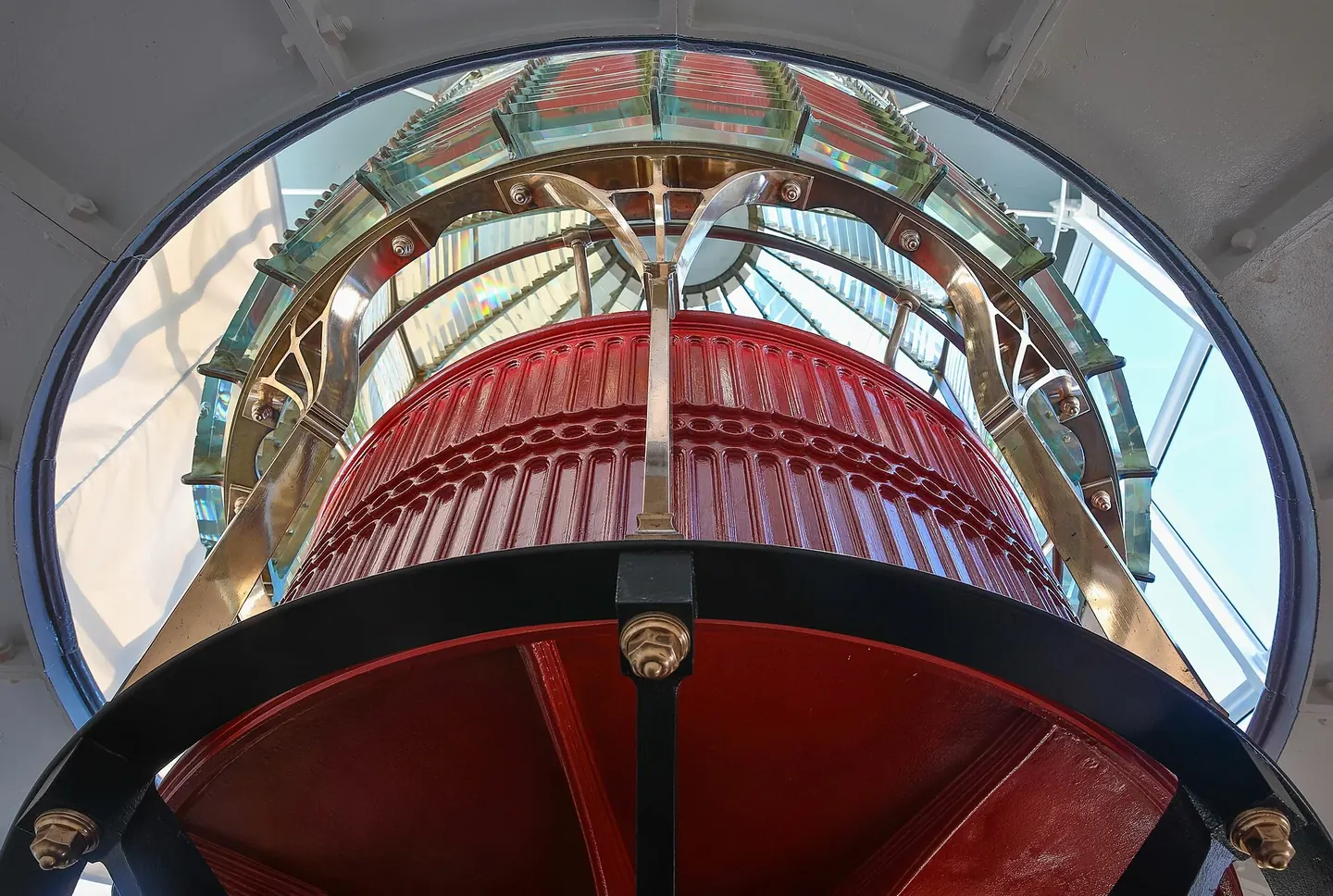
Then came the technology. Fresnel lenses, developed in France in the 1810s and installed there from the early 1820s, spread through the American system until, by the Civil War, every U.S. lighthouse had one — the optical revolution explained in how a Fresnel lens works. The Board replaced copper-clad wooden buoys with iron ones and color-coded the buoyage; it introduced mechanically rung fog bells in the 1850s and later steam whistles and siren-trumpets, the lineage traced in how fog signals work; it pushed interlocking-stone construction for wave-swept sites and introduced screwpile and caisson foundations. It also institutionalized information: changes to navigational aids were published in the Notice to Mariners, a supplement to the Light List recording every aid, its location and its characteristics — the ancestor of the system covered in Notices to Mariners.
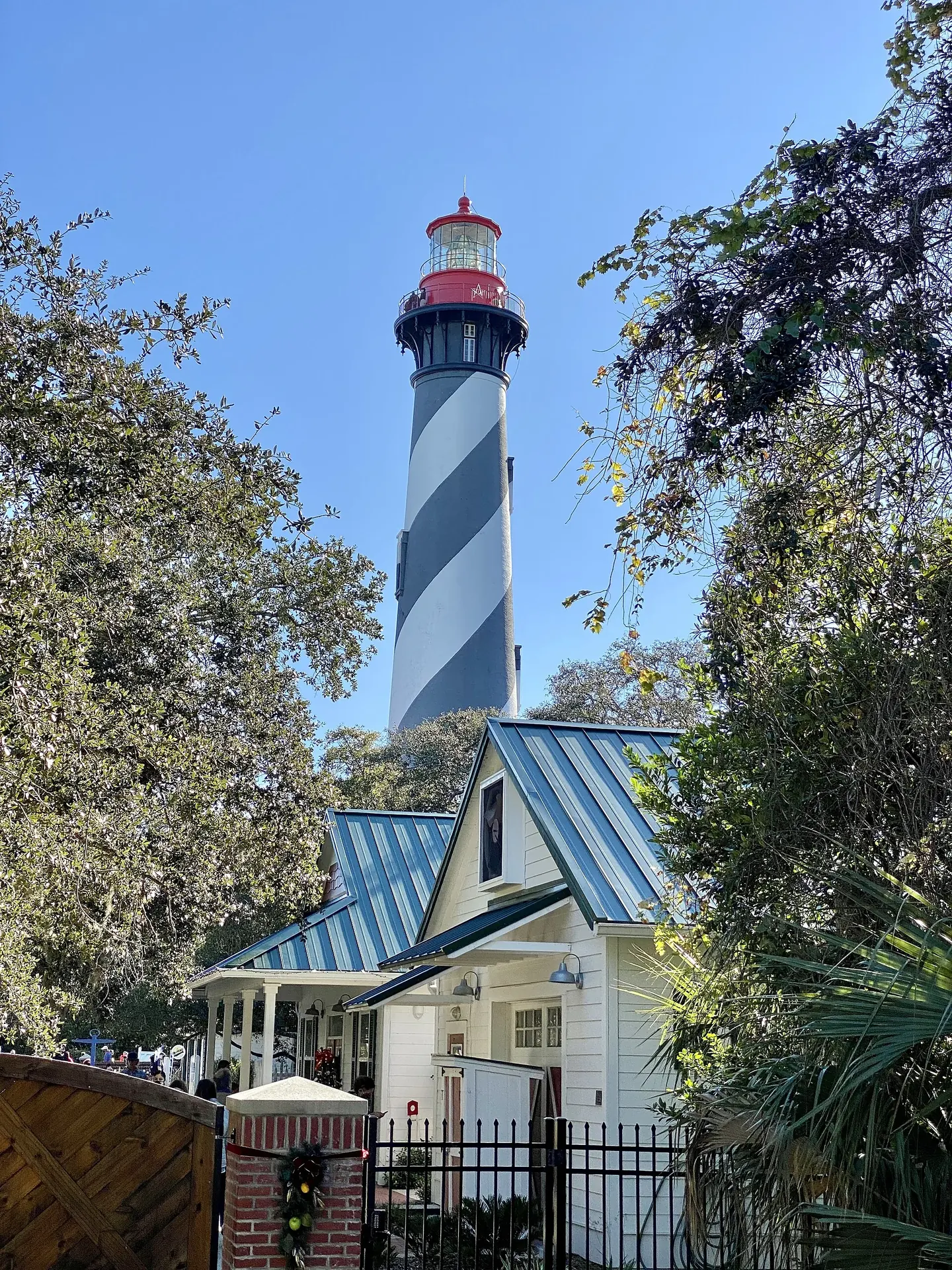
Coast-wide, the Board's standardizing instinct shows up in paint as much as in optics: its studies drove the heightening and red-over-white painting of Cape Hatteras in the 1850s, and in 1873 the Board ordered the tower's black-and-white daymark, assigning each lighthouse a distinctive paint pattern and light sequence so mariners could recognize them from all others — the subject of our piece on daymarks.
The Board's limits
The successor organizations inherited the Board's template: districts with inspectors, written instructions, published corrections and professional staffing. The Bureau lasted until the Lighthouse Service was transferred to the Coast Guard in 1939, and the district structure it standardized survives in Coast Guard aid-to-navigation organization today.
Trace an institutional change to a station record
The NPS overview describes the Board's creation in 1852 after an 1851 investigation, followed by district administration, instructions and technological changes. That is an institutional outline. To establish when a particular light received an optic, consult its station history rather than assigning it the reform's first year.
Boston Light makes the distinction concrete: the Board began in 1852, while Boston's second-order Fresnel installation dates to 1859. Cape Hatteras's later daymark change supplies another dated station decision. A national policy and a completed local alteration need not coincide.
A reform can change how evidence is produced
Written instructions, inspection reports and published corrections did more than describe machinery. They created a system in which a discrepancy could be reported, assigned and checked. A useful hypothetical document chain has a keeper reporting a problem, an inspector assessing it and an authority publishing a change if the aid's service is affected. Actual chains must be established from the records.
This interpretation does not mean all earlier work was accidental or every later decision successful. Nor does a report's existence prove that its recommendation was implemented. Keep the recommendation, appropriation, construction and commissioning dates separate when following a proposal through the system.
Read institutional names with their dates
The Board and the later Bureau of Lighthouses belong to different periods. The broader phrase Lighthouse Service is used in historical accounts, including the NPS overview; it should not be dismissed as simply an invalid name. Identify the body and date relevant to the document being discussed.
The 1910 reorganization and 1939 Coast Guard transfer are further changes, rather than a claim that the Board still exists in another uniform. Modern practice can inherit methods while statutes, responsibilities and technology evolve. Name the particular inherited practice without assuming that present procedures remain unchanged.