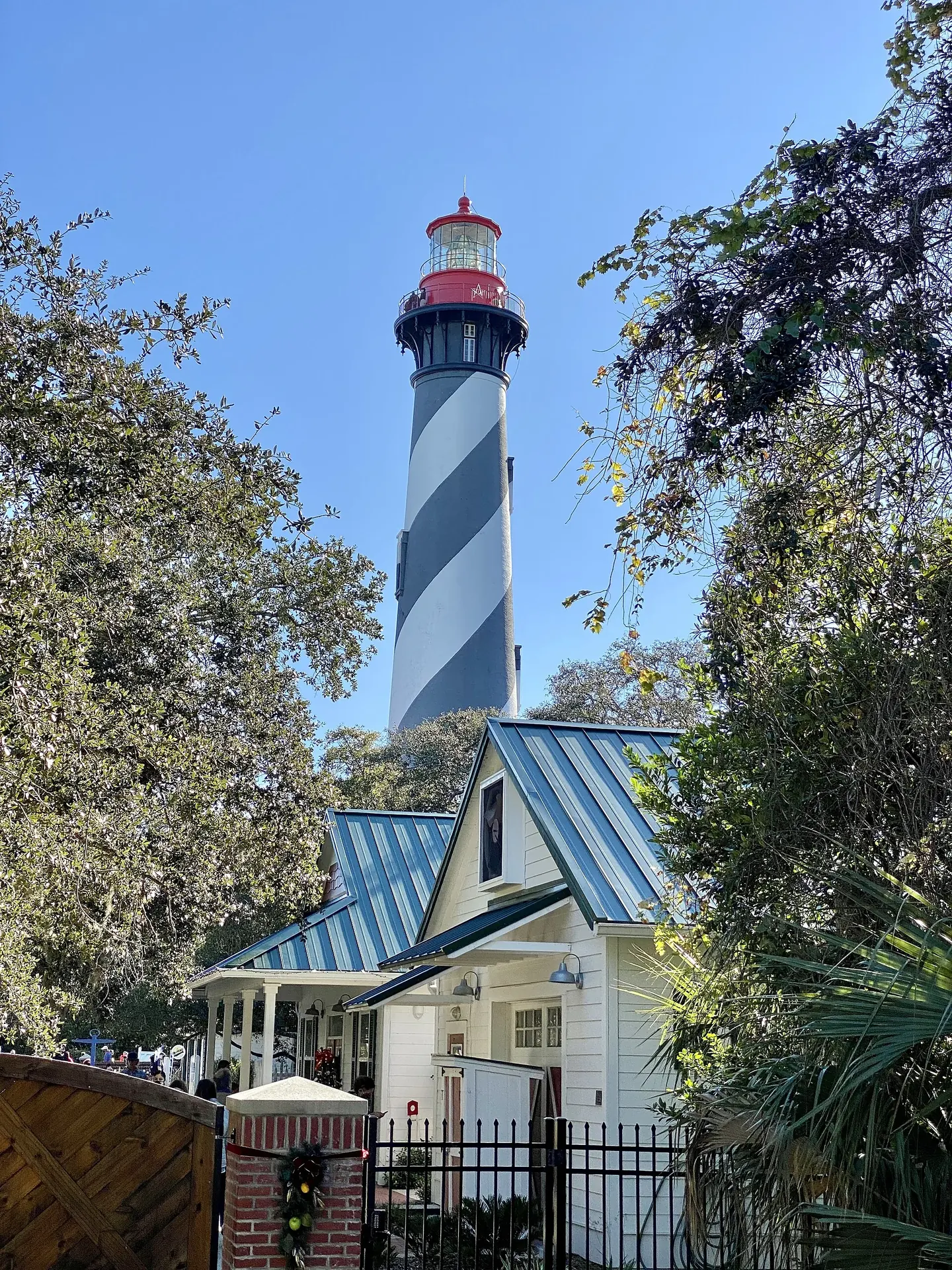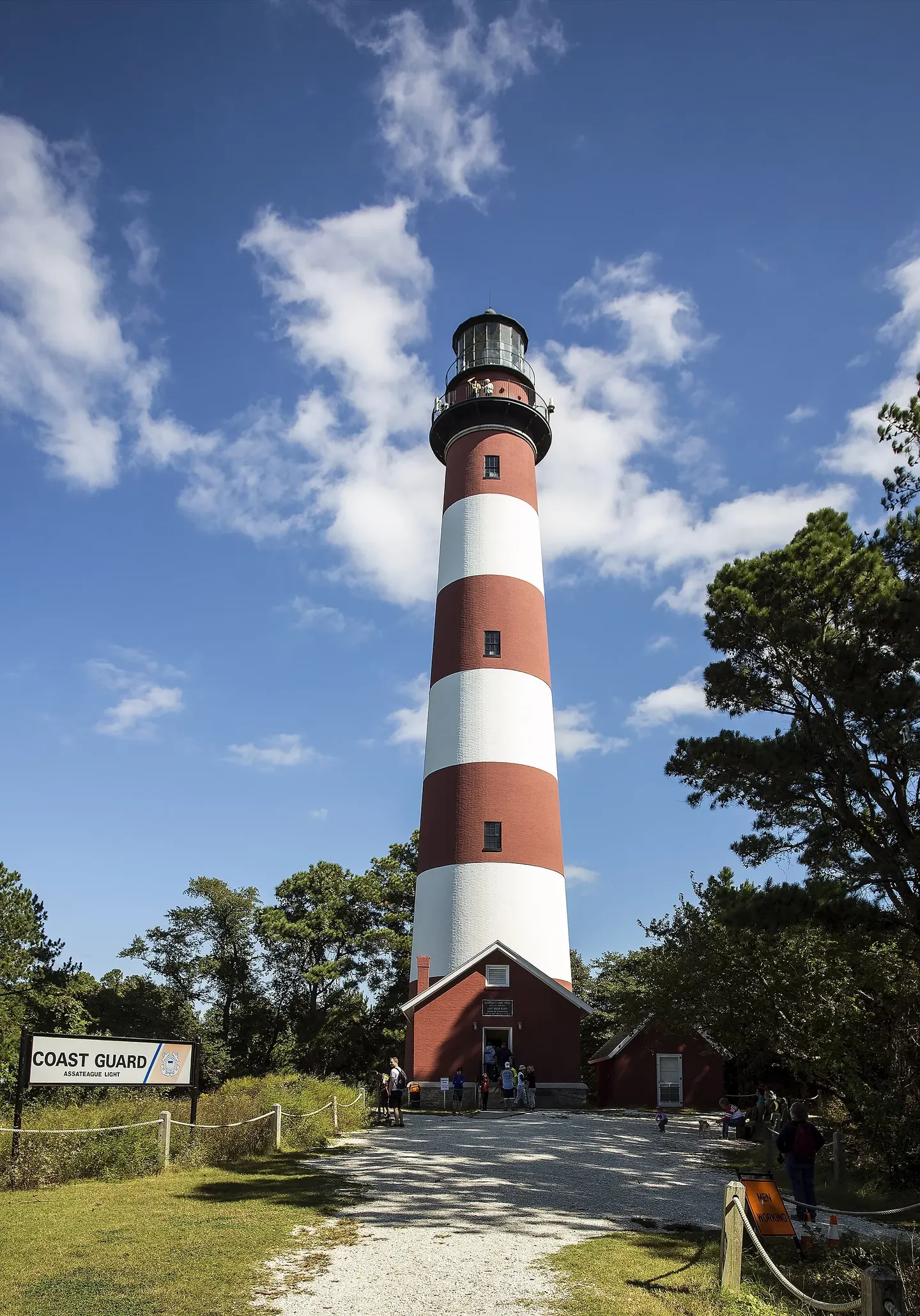
A lighthouse's light is useless if the mariner cannot tell it from the next light down the coast. At night that problem is solved with rhythm — the flash pattern, the color, the intervals listed in the Light List. But ships sail in daylight too, and by day a white tower is a white tower. The answer was to make the structure itself into a signal: the painted pattern on a lighthouse or beacon is called its daymark, and it is not decoration. It is the daytime half of a two-part identification code.
The problem of the unpainted tower
The need for daymarks is clearest in a failure. The first Cape Hatteras lighthouse, lit in October 1803, was a 90-foot sandstone tower on North Carolina's Outer Banks — a coast so dangerous that the shoals off Hatteras became known as the Graveyard of the Atlantic. The tower failed at its job for three reasons the National Park Service lists plainly: it was too short, its unpainted sandstone blended in with the background, and its signal was not strong enough to reach mariners. The background-color problem concerned daytime recognition; height and lamp performance need their own explanation. A light that cannot be distinguished from the land behind it helps nobody, day or night.
The Board's answer: paint as a signal
Reform arrived with the Lighthouse Board of 1852, which treated visibility as an engineering problem. Following Board studies, Cape Hatteras was heightened to 150 feet in the 1850s — and the newly extended tower was painted red on top of white, explicitly, in the Park Service's words, "making the lighthouse more recognizable during the day." The first-order Fresnel lens installed at the same time fixed the night side of the problem, the optics described in how a Fresnel lens works.
The decisive step came in 1873. The Lighthouse Board ordered the new 1870 tower at Cape Hatteras painted in its famous black-and-white spiral stripe, and in the same stroke it institutionalized the principle: the Board assigned each lighthouse a distinctive paint pattern — the daymark — and light sequence — the nightmark — to allow mariners to recognize it from all others, during the day and at night, as they sailed along the coast. A tower's paint scheme, in other words, is part of the aid to navigation itself, with the same standing as the lamp inside the lantern.
How a daymark works
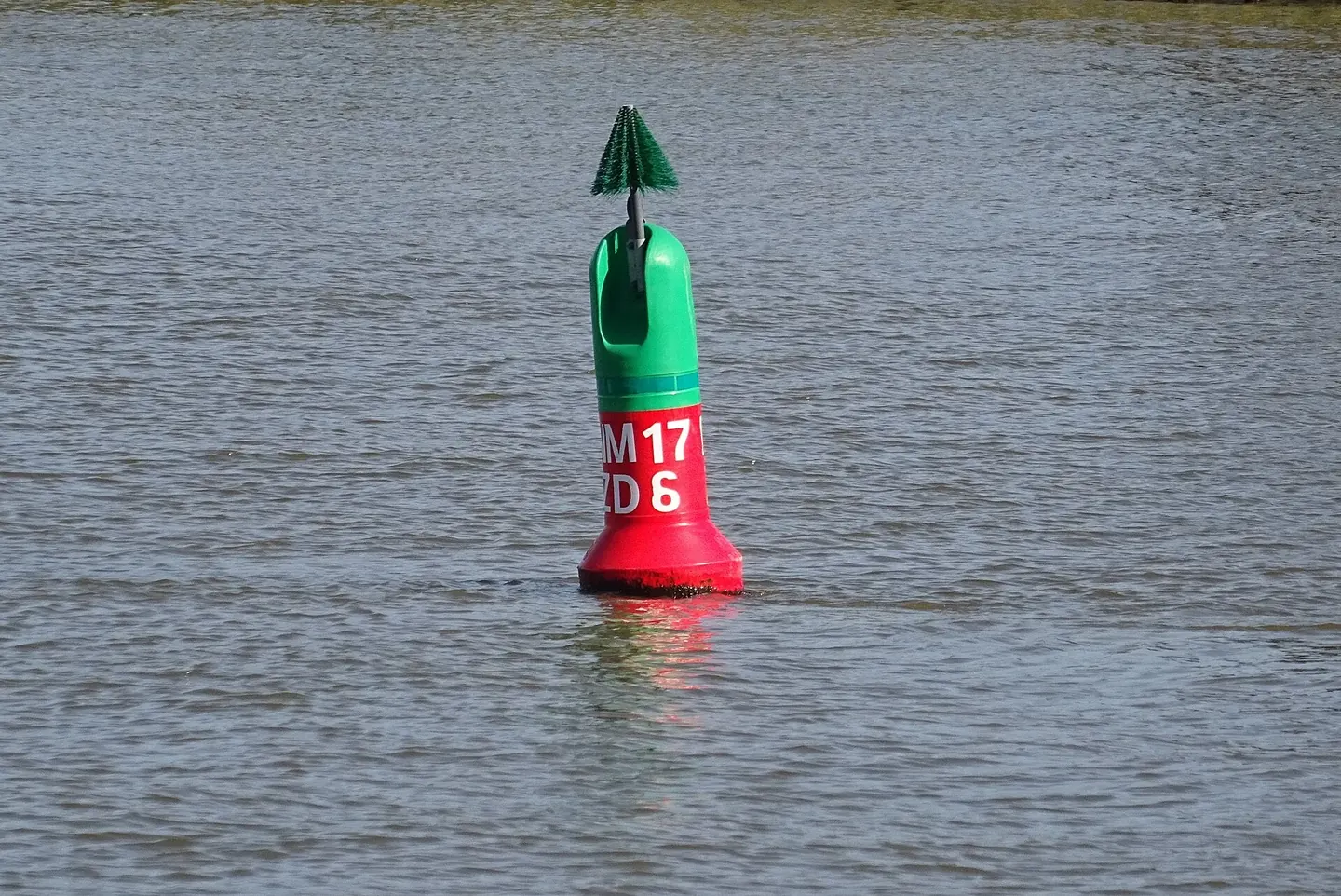
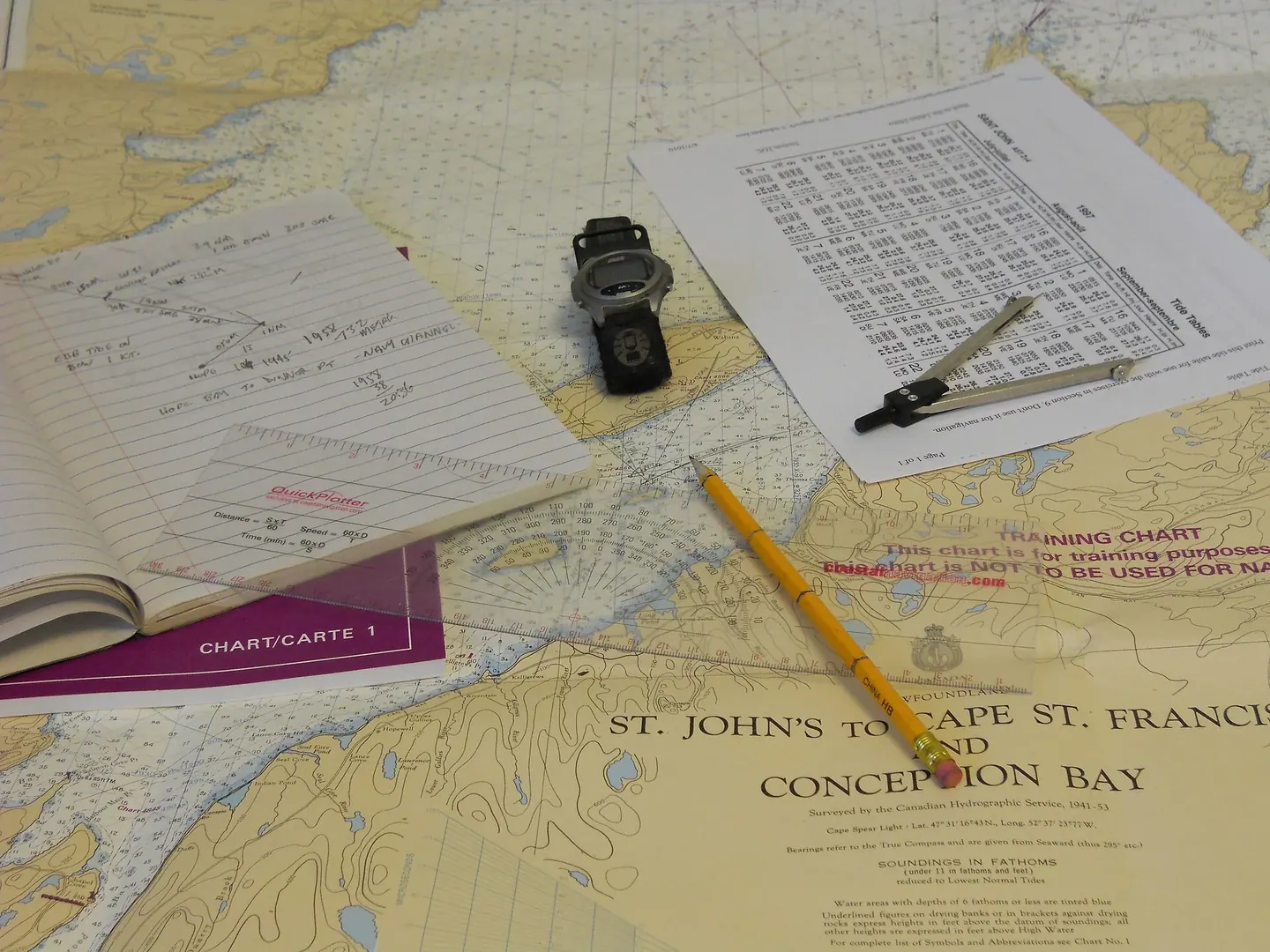
The grammar of daymarks is a small visual language. Solid colors, horizontal bands, vertical stripes, spirals and chevrons each assign a tower a unique signature that the mariner matches against the chart and the Light List entry. The same logic extends below tower scale: the modern U.S. system marks minor aids with dayboards — flat panels carrying shapes and colors fixed by regulation — and the Coast Guard's official overview of the aids to navigation mission lists the daybeacon among the system's standard aid types, alongside buoys, major lights and range lights.
Paint is a maintenance schedule
Legibility also has a physics. The 1803 tower's unpainted sandstone failed against a bright sky and a pale beach; the 1850s red-over-white repaint and the 1873 spiral both exploit contrast — dark on light, color on neutral — because a daymark is read at a distance, in haze, against the confusing background of a developed shoreline. The boldness is the engineering, not the ornament.
The position still matters
Cape Hatteras's spiral remained recognizable after the 1999 relocation, but the tower's position changed and that change mattered to navigation information. A recognizable pattern must still be related to its actual, charted position. Identification and location are complementary, not competing, properties of an aid.
A similar pattern at another tower does not make it the same station. Shape, surrounding features and the charted location contribute to recognition. A local set of distinctive marks should not be described as a guarantee that every pattern is globally unique.
Compare the tower with its background
Take a hypothetical photograph from one approach and note the visible portions, contrast and obstructions. Then compare another viewpoint. A stripe that reads clearly against one background may look different against another. This illustrates the problem of conspicuity without claiming a photograph measures the distance at which mariners can identify the real aid.
The same exercise helps interpret historical repainting. Record the date, the specified pattern and what feature changed. A restoration photograph may show an intermediate stage, not a new permanent daymark. A maintenance contract can describe intended work without proving that every surface was repainted exactly when planned.
A pattern and a maintenance record answer different questions
The chart or official list describes the aid expected by users; a condition report describes what an inspection found. Both are needed to evaluate legibility. Fading, marine exposure or a nearby obstruction is an observation requiring context, not automatic proof that the original paint design was flawed.
Keep painted tower schemes distinct from standardized dayboards and topmarks. They share a recognition purpose but belong to different physical forms and rule sets. Follow buoyage regions for lateral conventions and notices for changes. The specific Hatteras example explains the importance of daytime recognition without turning its spiral into a universal code for every coast.