A lighted buoy can look like a self-contained object, but its ability to mark a position depends on several parts working together: the buoy body, its light or other signal, its power source, its mooring and its assigned location. Maintenance brings those parts back into view. A documented Trinity House programme shows what one authority checks during a planned service, while also illustrating why its annual schedule should not be assumed to apply to every buoy in every jurisdiction.
The aid is more than the hull above water
Maintenance therefore asks whether the buoy is where it should be, whether its displayed character is correct, whether the mooring remains suitable and whether the light or equipment is working as intended. These are connected checks. A buoy can have a functioning lantern but still be unsafe if its mooring is damaged or it has moved off station. Conversely, a correctly positioned buoy with the wrong color or light characteristic can mislead a mariner.
A planned inspection at each location
Trinity House says its buoy maintenance service includes an annual inspection and planned preventative maintenance at each customer location. The described work can include checking the buoy’s location, moorings and exhibited character, lifting and cleaning it, repairing or replacing parts, and issuing an annual condition report with advice and recommendations. This is a clear description of that provider’s programme, not a universal rule that all aids around the world receive exactly one annual inspection.
What crews are trying to verify
Location. The buoy needs to occupy its assigned position within the tolerances set by the authority. An off-station buoy can change the meaning of a channel mark or hazard boundary. Location checks may involve position records or survey equipment, depending on the operation. A small movement is not automatically harmless; the authority determines whether the aid remains acceptable.
Mooring. The anchor, chain, shackles and other components are exposed to movement and corrosion. Their condition affects whether the buoy stays on station. Trinity House includes moorings in its maintenance checks. Public-facing service descriptions do not specify a single chain design or inspection measurement for every site, so these details should not be generalized.
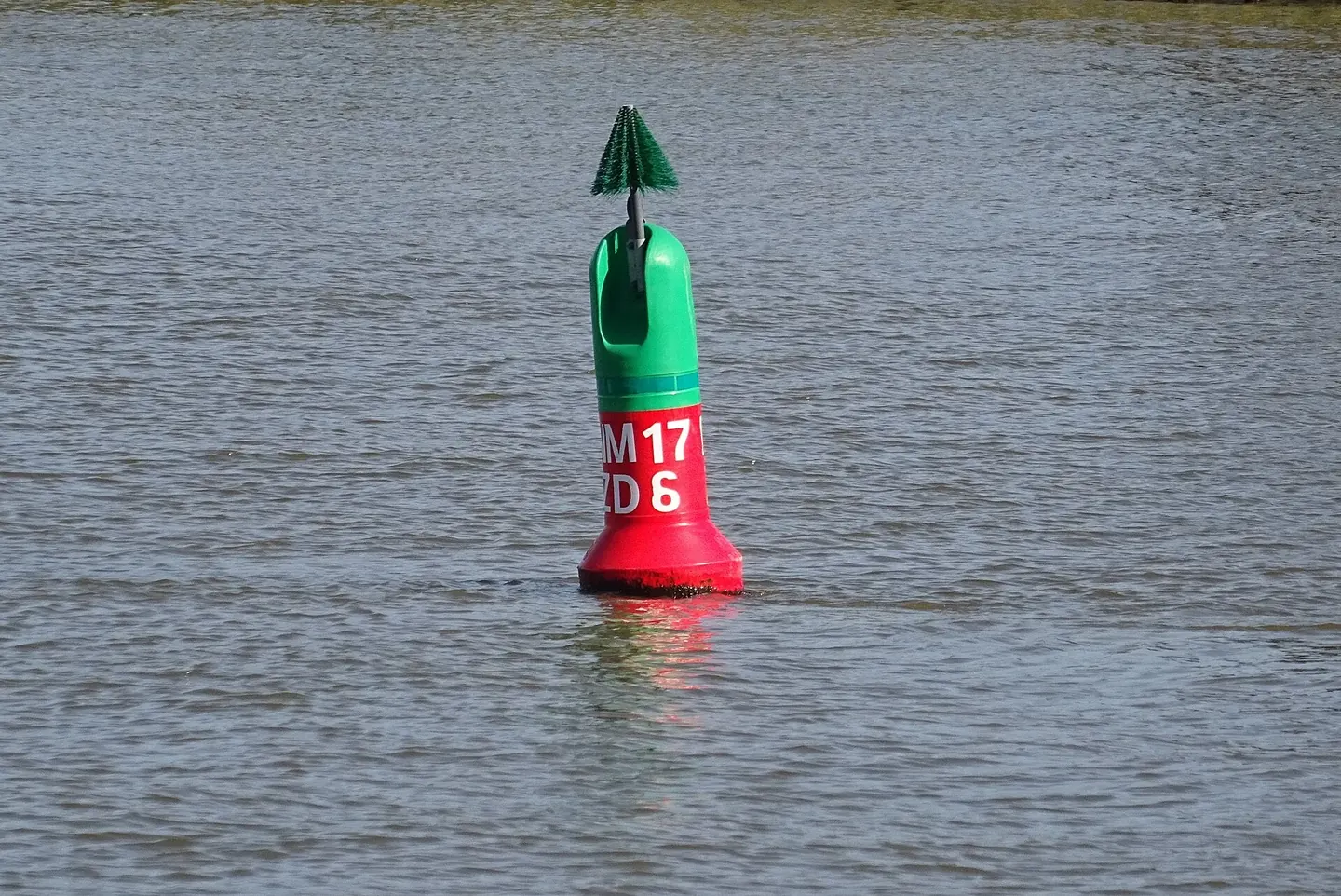
Character and visibility. The buoy’s color, shape, topmark and light characteristic help distinguish its function. Cleaning can restore conspicuity when growth, deposits or dirt obscure the surface. At one documented Trinity House inspection, the operator describes cleaning a buoy so that its distinctive green starboard-side color would be clearly visible. That is a site example, not evidence that every green buoy follows the same maintenance schedule or design.
Signal and power. A lighted aid must show its published characteristic. A service can examine the lantern and its power equipment, and any AIS or environmental sensor equipment included on that buoy may need checks under the applicable programme. A buoy that is physically present but dark may still be a navigation discrepancy. The authority’s Light List and notices communicate current status or planned changes to mariners.
From afloat work to shore repair
Not every problem is fixed at sea. Trinity House describes its overall service as including on-station cleaning, examination, maintenance and exchange, plus shore-based repair, refurbishment and replacement. Damage or wear may require an aid to be brought ashore, where a buoy body or superstructure can be repaired and repainted. A unit that cannot be safely returned to service may need replacement instead.
When a buoy is reported off station
Storms, collisions, current, ice or mooring failure can move an aid. Trinity House lists recovery and re-establishment of off-station aids among its buoy services. A reported discrepancy has to be assessed: the authority needs to determine which aid is involved, how far it has moved, whether its light or other features remain operational, and what notification mariners need.
One defect, several different records
Consider a hypothetical report that a channel buoy's light is dark. The report identifies a discrepancy; it does not establish whether the cause is the lantern, power supply, controls or an observation made outside the intended operating period. The service record should distinguish what was reported, what was found and what was changed.
If the buoy is exchanged, retain the distinction between the aid's assigned identity and the particular physical asset removed. A replacement body can occupy the same station, while the old body goes ashore for work. Without those two identities, a later editor might mistake an asset's workshop history for a period when the channel mark was absent.
The completion record should also identify any temporary arrangement and its withdrawal. Inspection, repair and information to mariners are connected tasks, but signing one record does not prove the others occurred. This example explains the value of linked records without prescribing a universal maintenance interval or a procedure for lifting a buoy.
Keep a dated station identifier beside the asset number so that an exchange does not erase the removed buoy’s repair history.