The Great Lakes do not supply one standard lighthouse site. A cliff above Lake Superior, a reef far offshore and a shoal in a shipping route pose different construction and access problems. Comparing those settings explains more than counting towers or describing all freshwater stations as a separate, uniform school of engineering.
Begin with the station, not the regional superlative
A regional inventory needs consistent definitions: does it count active aids, historic towers, replacement structures or every station that once existed? Without that boundary, a claim about the world's densest concentration cannot be checked. This comparison instead uses named examples and identifies the particular task each setting created.
The same care applies to dates. A station's establishment and its surviving tower's construction may fall in different years. Fort Gratiot and Whitefish Point illustrate why those events should be recorded separately. A single “built” field can conceal rebuilding, a replacement light or a change of structure at an existing station.
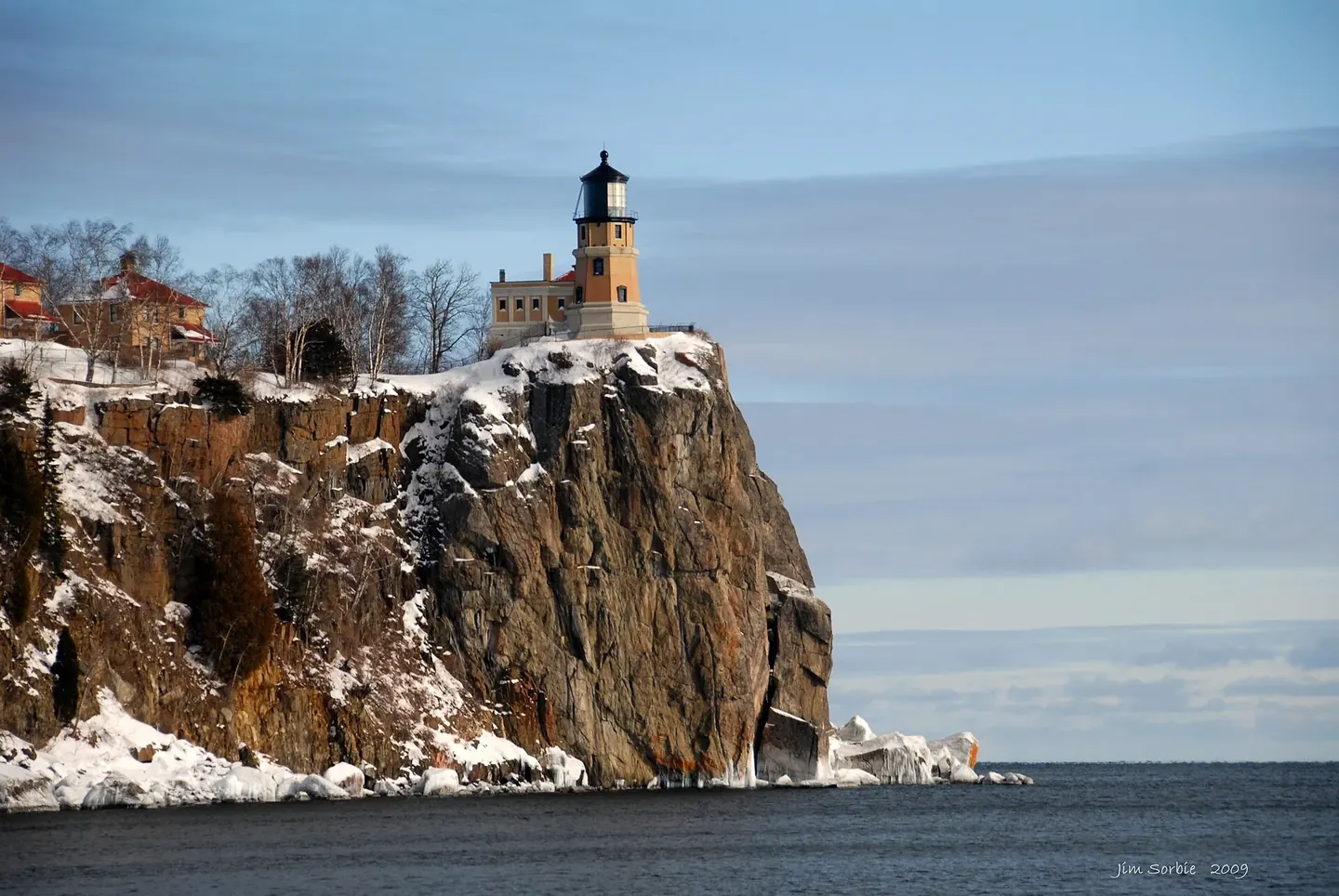
Split Rock: the cliff dictated the supply route
The Minnesota Historical Society dates Split Rock's construction to 1910 and connects its establishment with losses in the November 1905 storm. Before the highway reached the site in 1924, access was by water. The station's cliff made getting materials from a vessel to the working buildings part of the engineering problem.
Its early seasonal operation also matters. The society describes a May-to-December working season, with families often visiting in summer rather than residing throughout the year. That is evidence for this station's arrangement, not a claim that every Great Lakes light closed for winter.
For a site comparison, draw the supply route in stages: vessel, landing, ascent and storage. A reliable lamp depends on the parts and fuel completing that route, but the route should not be confused with the light's visibility. A high cliff can help one aspect of a station while complicating another.
Stannard Rock: remoteness and a second use
The Superior Watershed Partnership's restoration campaign records Stannard Rock as completed in 1882 on a Lake Superior reef. It describes the station's exposed crib and the use of the lighthouse for remotely monitored environmental observations. Its 2021 document is a dated campaign account; proposed fundraising and future work should not be reported as completed repairs.
The observation role adds a useful dimension to preservation. Keeping a structure available for instruments is a different requirement from maintaining overnight keeper accommodation or admitting visitors. A lighthouse can serve several purposes without all of them operating under the same access arrangements.
Do not let the familiar “loneliest” nickname become a technical measure. Distance to shore, frequency of transport and ability to land are different quantities. A relatively near station may still be difficult to reach under particular conditions, while an offshore station can have a planned maintenance system. The human experience of isolation requires its own evidence.
White Shoal: compare the aid before and after
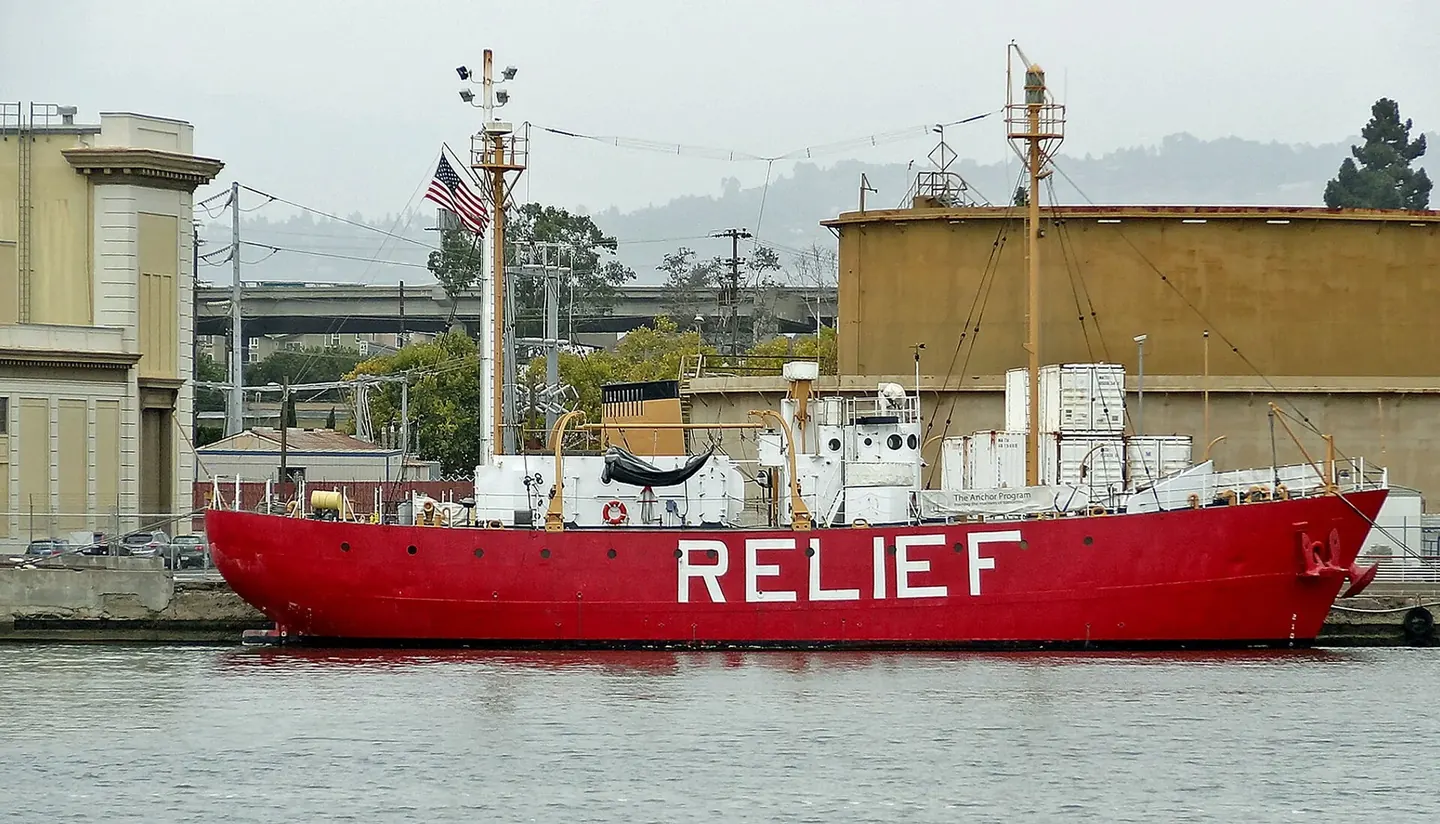
White Shoal's history includes a lightship followed by a permanent lighthouse. The important question is what changed in the way the location was marked and maintained. A ship held on station and a fixed structure have different support systems; replacing one with the other does not make the earlier arrangement irrational.
The tower's red-and-white spiral is an identifying paint pattern; other American lights also use spiral schemes. Cape Hatteras supplies a familiar counterexample in different colors. Claims about the tallest tower also require consistent measurements: tower height and focal elevation above water cannot be mixed in a ranking.
Ice is an exposure to investigate, not a universal explanation
Fresh water does not eliminate wave loading, difficult landings or deterioration. Equally, ice should not be invoked as the cause of every recorded repair. Identify what the account actually describes: accumulation on equipment, conditions around a support, interrupted transport or a damaged component. These observations do not all have the same consequence.
A useful hypothetical comparison has two rows. At a cliff station, ask how stores reach the buildings and which observation establishes a transport interruption. At a reef station, ask how the supporting structure is inspected and how a team gains access. The same storm can create different maintenance decisions at those two sites.
Build a regional comparison with compatible evidence
For each station, record the navigation task, setting, support type, access route and dated changes of use. Add the source for each item rather than filling a blank with a characteristic borrowed from a nearby light. This method makes a regional overview useful without erasing local differences.
Follow foundations and erosion for support principles, tenders for vessel logistics and family residence for domestic arrangements. Those comparisons explain separate parts of a working network. None requires the unsupported conclusion that understanding one lake lighthouse amounts to understanding every lighthouse coast.
One final distinction is access for work versus access for visitors. A structure used for observation instruments may need periodic professional visits without offering public landings. A historical account of keeper residence should not be turned into a recommendation to approach an offshore station today.