A lighthouse built on a low offshore rock faces a problem different from a tower on a high headland. Waves may reach the structure directly, and the same exposure can interrupt construction and later maintenance. Minots Ledge and Fastnet offer documented comparisons, but neither makes every exposed tower indestructible or establishes a universal formula for survival.
Minots Ledge: distinguish the loss and the replacement
The National Park Service dates the first Minots Ledge light to January 1850. It stood on iron piles and was destroyed in the April 1851 storm, killing two assistant keepers. A lightship marked the site while the replacement was built. The masonry successor entered service in November 1860.
That sequence records a serious failure and a change of construction approach. It does not support a blanket conclusion that all iron-supported lights must fail or that any stone replacement would succeed. The particulars of the ledge, the connections, the design and the observed damage belong in an engineering explanation.
The storm is often described over the night of 16–17 April; the NPS account dates the destruction to 17 April. A supposed final message from a keeper requires separate provenance. A later dramatic quotation cannot establish what the assistants actually wrote, and the documented loss should not be embellished with an unauthenticated farewell.
Building time was not calendar time
The NPS describes workers preparing and fitting granite ashore before taking it to the ledge. Offshore work depended on low water and calm conditions. This makes the construction sequence useful: work could proceed at a preparation site even when the actual foundation was inaccessible.
A project's elapsed years are therefore not a count of continuous days working on the reef. When comparing cost or speed, distinguish quarrying, fitting, transport, offshore placement and interruptions. A short account that lists only the first and last stone misses much of the system that made placement possible.
Fastnet: reinforcement preceded replacement
Irish Lights records Fastnet's first light in 1854 in a cast-iron tower. It was reinforced before a new granite tower was authorized in 1891. The operator associates that decision with concern about the earlier structure and the need for a stronger light, including the warning supplied by Calf Rock's storm damage.
The new Fastnet light was established on 27 June 1904. Its dovetailed granite assembly was designed by William Douglass and constructed by the Commissioners' workforce. These are documented project facts; describing its joints as the sole reason for every later survival would go beyond them.
Strengthening the old tower, replacing the structure and changing the lighting apparatus were different interventions. That distinction helps explain why the project cannot be reduced to substituting granite for iron. The navigation requirement and the construction system changed together.
A surviving tower is not a controlled experiment
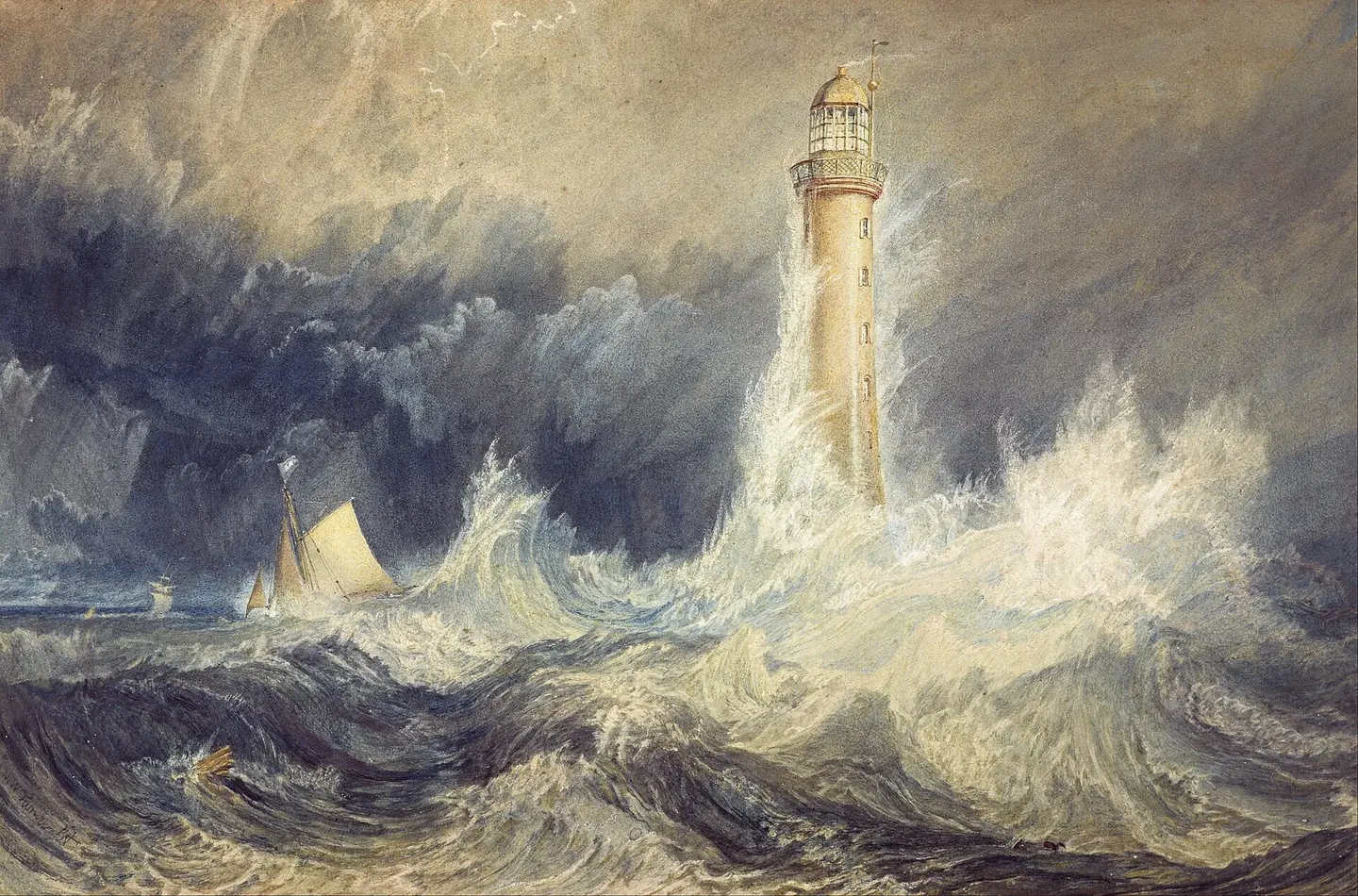
Photographs of a wave crossing a lantern establish an extraordinary moment, but do not measure every force in the structure. A spray plume is not automatically the crest height of the incoming wave. An engineering account needs to identify instruments, reference levels, timing and the quantity actually measured.
Similarly, survival during one storm does not demonstrate unlimited capacity. The state of the structure before the event, recorded damage afterward and later repairs matter. Claims of no significant damage over a century require evidence broader than a station's continued existence.
A useful comparison asks what is being observed: wind speed at an instrument, water level, wave impact, movement of a component or damage found at inspection. These are related but distinct measurements. Converting one into another without a method can turn an impressive story into a false numerical claim.
The light and the historic optic can diverge
Irish Lights records the 2018 decommissioning of Fastnet's Fresnel lens in place, removal of the mercury and installation of a new LED rotating light. The working signal and the preserved historic assembly were no longer the same apparatus. A current photograph of the old lens cannot establish the present light source.
That distinction also affects historical comparisons of range. Use a date and identify the apparatus before placing a number beside a tower. Otherwise an old intensity and a new nominal range can be combined into a specification that never existed.
What these two cases can teach
Minots Ledge makes the separation between shore preparation and offshore placement clear. Fastnet makes successive strengthening, replacement and equipment modernization clear. Together they show that an exposed station is maintained through decisions over time, rather than completed once and exempted from further change.
For the physical connections, see masonry geometry. For the supporting ground, see foundations. Keeping those questions separate allows a more precise account of exposure than the claim that enough weight and the right curve make waves harmless.
A replacement tower also does not erase the earlier station. Record the temporary aid and the period it served. At Minots Ledge, the lightship belongs to the continuity of marking the hazard, even though it belongs to neither tower construction and leaves no masonry in the final building.