Stone, on Smeaton's pattern
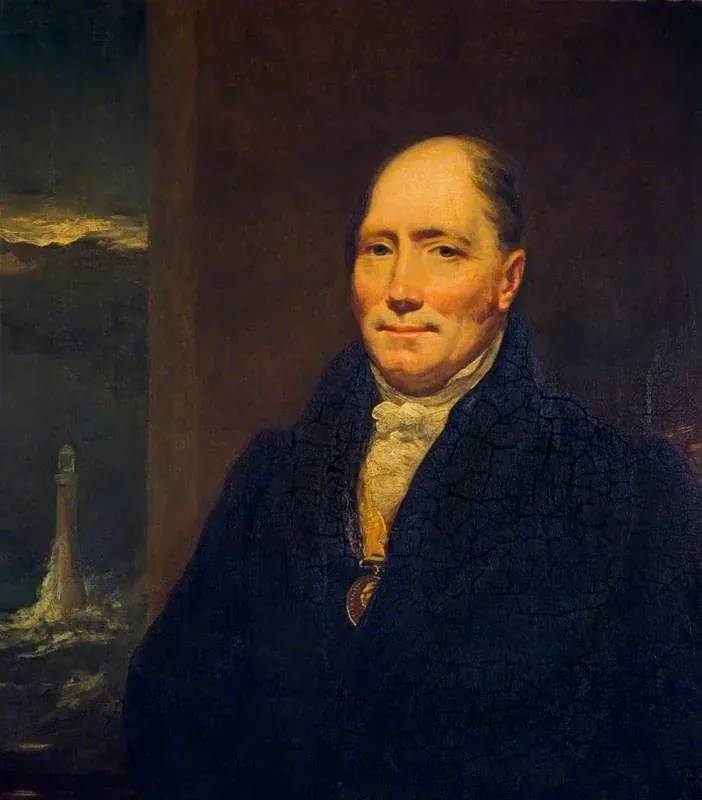
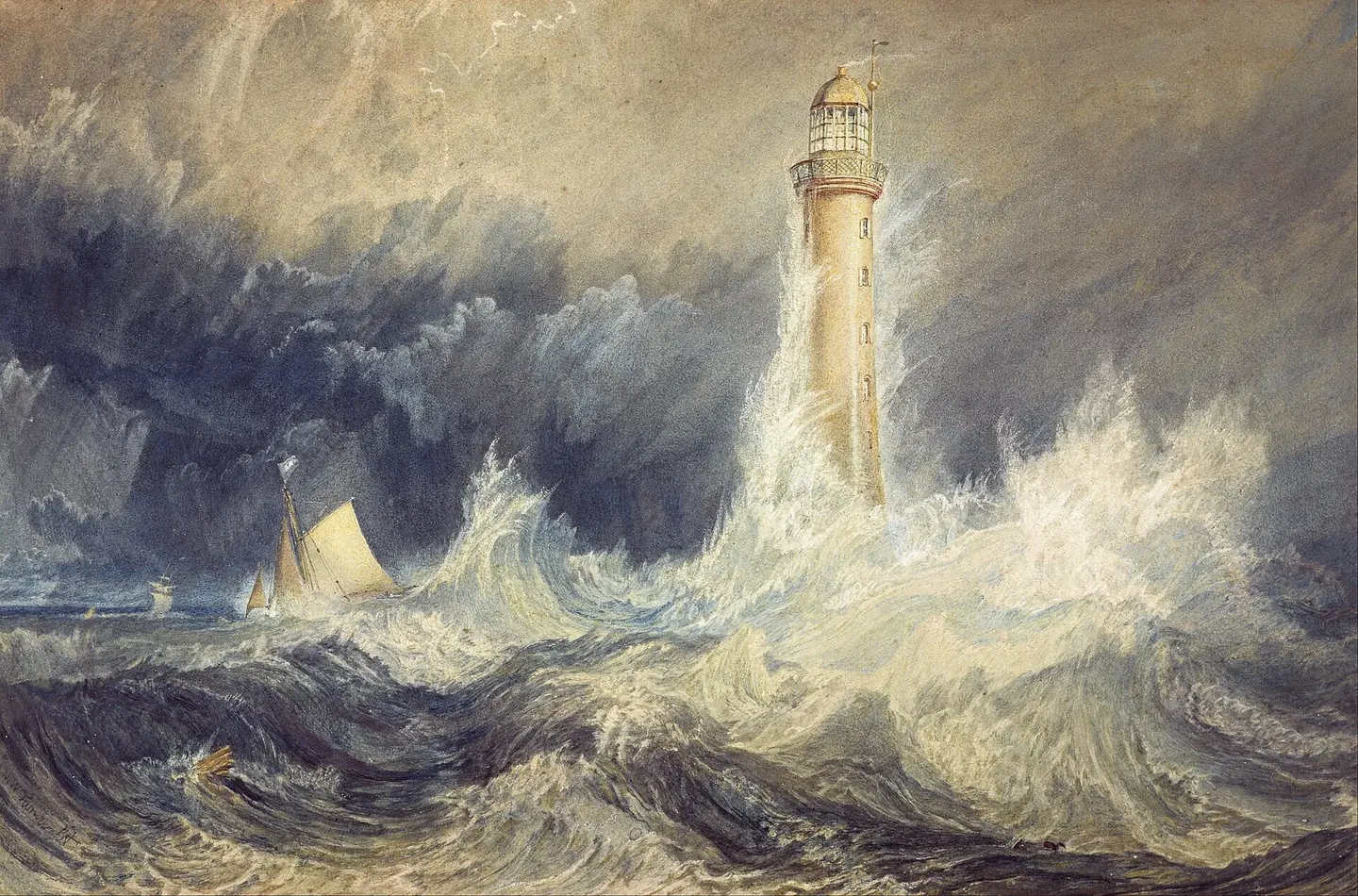
The design that followed was openly a development of Smeaton's third Eddystone tower, whose curved profile and interlocked stonework had by then proved itself for half a century. "Both engineers agree in describing the lighthouse as being a copy of Smeaton's Eddystone Tower with sundry improvements in details and dimensions," wrote Cyril Boucher, John Rennie's biographer, quoting the engineers themselves. The two men in question were the pair history has never quite stopped arguing about: John Rennie, the eminent civil engineer the Commissioners appointed as chief engineer, and Robert Stevenson, the Board's own engineer, appointed resident engineer, who lived through the work and directed it on site. The Institution of Civil Engineers' museum history of the build is blunt about the outcome: the lighthouse was "designed and executed jointly and competently by Rennie and Stevenson," with the dovetailed masonry that defines the structure insisted upon by Rennie and regarded by Stevenson as essential.
The tide table decides everything
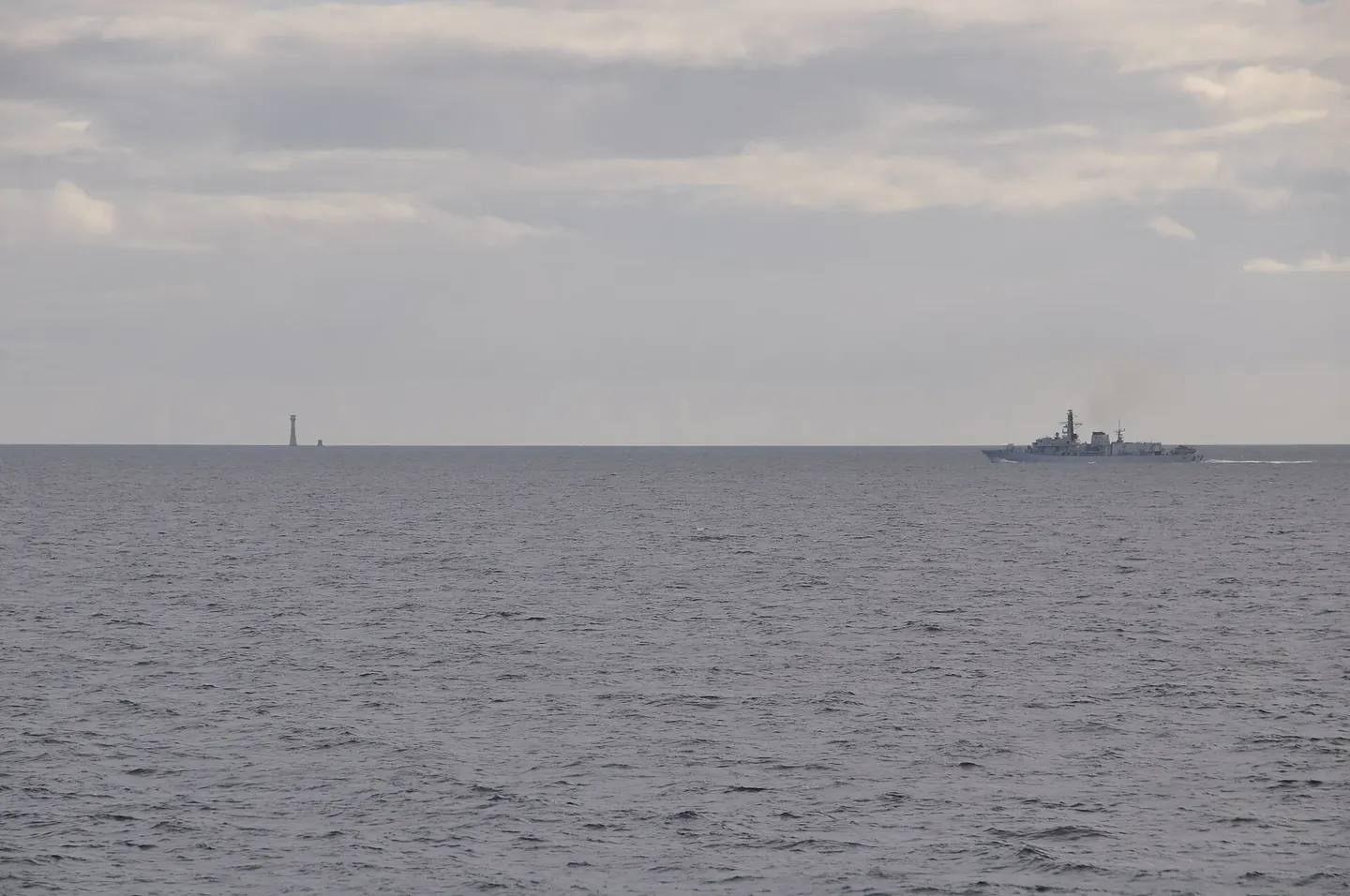
Construction began in the summer of 1807, and the first seasons were as much about logistics as masonry. A temporary floating light named Pharos was moored off the reef from September 1807, serving as workshop, hostel and warning mark; later the men moved into a timber beacon house raised on legs driven into the rock, so they could sleep above the waves instead of rowing out to them. Work happened only while the reef stood clear of the sea — roughly two hours a day in fair conditions — and every stone had to arrive finished. The blocks, around 2,800 of them, were quarried as sandstone at Mylnefield near Dundee and as granite at Rubislaw near Aberdeen, then dressed to shape at a purpose-built workyard at Arbroath, where a single horse named Bassey hauled the carts to the supply vessels. On the reef itself, the crew cut dovetail recesses into the rock, laid the first course of the tower in the summer of 1808, and later ran a small timber railway and a hand-operated crane to move blocks weighing up to a ton and a half into position before the tide returned.
First light, and two centuries of weather
The tower was completed in 1810 at a cost of some £63,000, and the light was first shown on 1 February 1811. Its reputation was immediate: Sir Walter Scott, who visited the rock with the Commissioners, greeted the tower in verse as "a ruddy gem of changeful light." In 1813 a shore station, the Signal Tower at the mouth of Arbroath harbour, was built to relay the keepers' messages — today it is a museum of the build. Stevenson's 1824 account became a foundational text of civil engineering, and the project's fame was such that the BBC counted the Bell Rock among the "Seven Wonders of the Industrial World" in 2003.
Why the reef changed the work sequence
The Northern Lighthouse Board records excavation beginning in 1807 and the light first exhibited in February 1811. Low-water access constrained the early work, while stone preparation and supply organization could proceed elsewhere. A construction account should distinguish those locations instead of treating every working day as time spent placing masonry offshore.
The temporary accommodation and the shore yard were therefore parts of the project, not scenery around the main achievement. A completed stone arriving at the reef embodied work already performed by other people. Naming only the resident engineer hides that preparation, transport and the labor of the construction crew.
Use a task map to read the history
Put quarrying, dressing, transport, landing and placement on separate lines. For each, ask which activity could continue when the reef was inaccessible. This is an interpretive exercise based on the described work, not a reconstruction of every day's production. It explains why elapsed construction time cannot be converted directly into hours working at the foundation.
Next mark a dependency: a block must be prepared before it can be placed, while a landing needs suitable conditions. A delay at one stage may leave people at another stage still working. The project was a coordinated supply system, rather than a repeated scene of masons racing the same two-hour window in every season.
Separate the legend from the construction record
The warning-bell tradition and the later poem about Inchcape belong to the reef's cultural history. The NLB account explicitly discusses the lack of authentic documentary evidence for the medieval bell. That is a different evidence problem from dating the construction of the surviving lighthouse.
Likewise, an attribution of the loss of HMS York to this reef needs evidence specific to the ship. A dramatic attribution and a precise casualty count should not be used as settled causes of the project without a ship-specific record. The construction argument can be followed through its authorization, preparations and work sequence without relying on that disputed connection.
Bell Rock's significance can be explained through documented organization, engineering roles and first lighting. Its later survival does not mean waves always tighten joints harmlessly or that no masonry has ever needed attention. Those stronger claims would require condition and maintenance evidence beyond a concise institutional history.