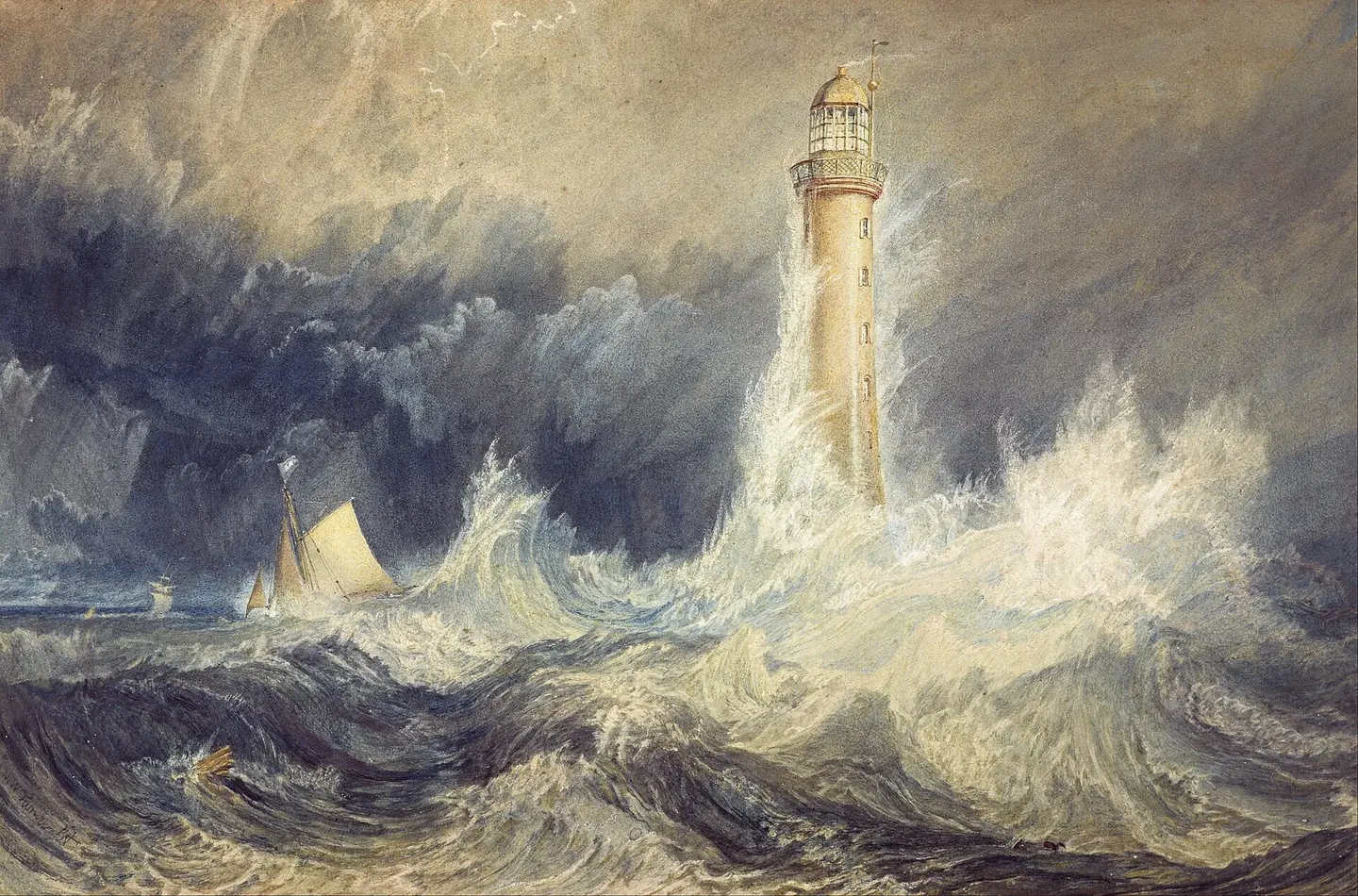
Counting Eddystone's towers is easy; explaining why there were four takes more care. A storm destroyed the first, fire destroyed the second, and deterioration of the rock supporting the third prompted its replacement. Calling all three structural failures hides the most useful distinction in this history: a tower, its equipment and its foundation are different parts of the problem.
Four towers, three different reasons to replace them
The sequence below follows Trinity House's station history. The dates identify the towers' service periods rather than the start of every construction campaign.
- Henry Winstanley, 1698–1703: the first tower was lost in the Great Storm of 1703. Its short life establishes the environmental challenge, but does not by itself isolate a single engineering defect.
- John Rudyerd, 1709–1755: a conical wooden tower replaced it. A lantern fire on 2 December 1755 destroyed the lighthouse. Surviving waves for decades did not make the building safe from a fire starting above its occupants.
- John Smeaton, 1759–1882: a stone tower, first lit on 16 October 1759, used interlocking blocks. Cracks developed in its supporting rock in the 1870s. Its upper portion was subsequently re-erected on Plymouth Hoe; the offshore stump remains.
- James Douglass, 1882 onward: the replacement used larger stones connected across adjacent blocks and successive courses. Automation followed in 1982.
Why the cause matters more than the count
Imagine being asked to commission the next tower after Rudyerd's fire. Repeating the previous building in a stronger material might address one vulnerability, but the brief would still need to cover the lantern, access, construction logistics and the rock beneath it. The later replacement of Smeaton's tower illustrates why an apparently successful superstructure cannot settle every question about a site.
This is an interpretation of the documented sequence, not a reconstruction of the designers' calculations. A station history tells us what was built and why the operator says it was replaced. It does not provide all the measurements needed to compare the four designs under an identical wave load. Statements that one profile was mathematically optimal, or that a particular joint alone made survival inevitable, would need separate engineering evidence.
How to read the stonework story
Two questions help separate the design ideas. First, how does a block remain connected to its neighbors? Second, how does the assembled tower transfer forces into the site? A description of dovetails answers part of the first question. It cannot answer the second without information about the foundation and rock. Treating the tower as one enormous, uninterrupted stone object skips the very interfaces an engineer would want to examine.
The chronology also resists a simple progression from primitive to perfect. Rudyerd's destruction by fire is a different event from Winstanley's storm loss. Smeaton's relocation is a different outcome again: part of the building survives as a monument, while the navigational job passed to a successor offshore. A replacement can therefore preserve evidence of an earlier solution as well as supersede it.
One site, two ways to encounter the history
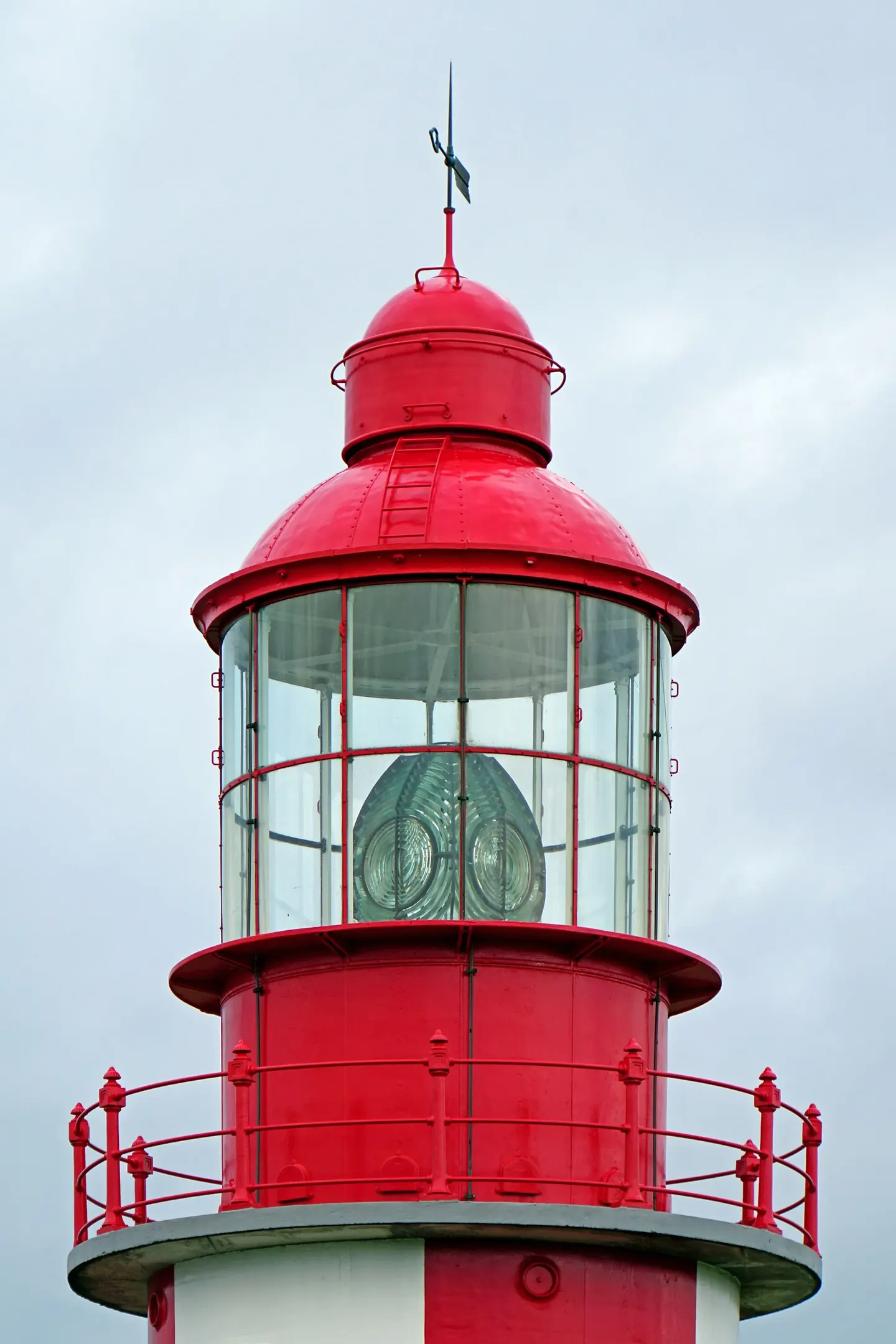
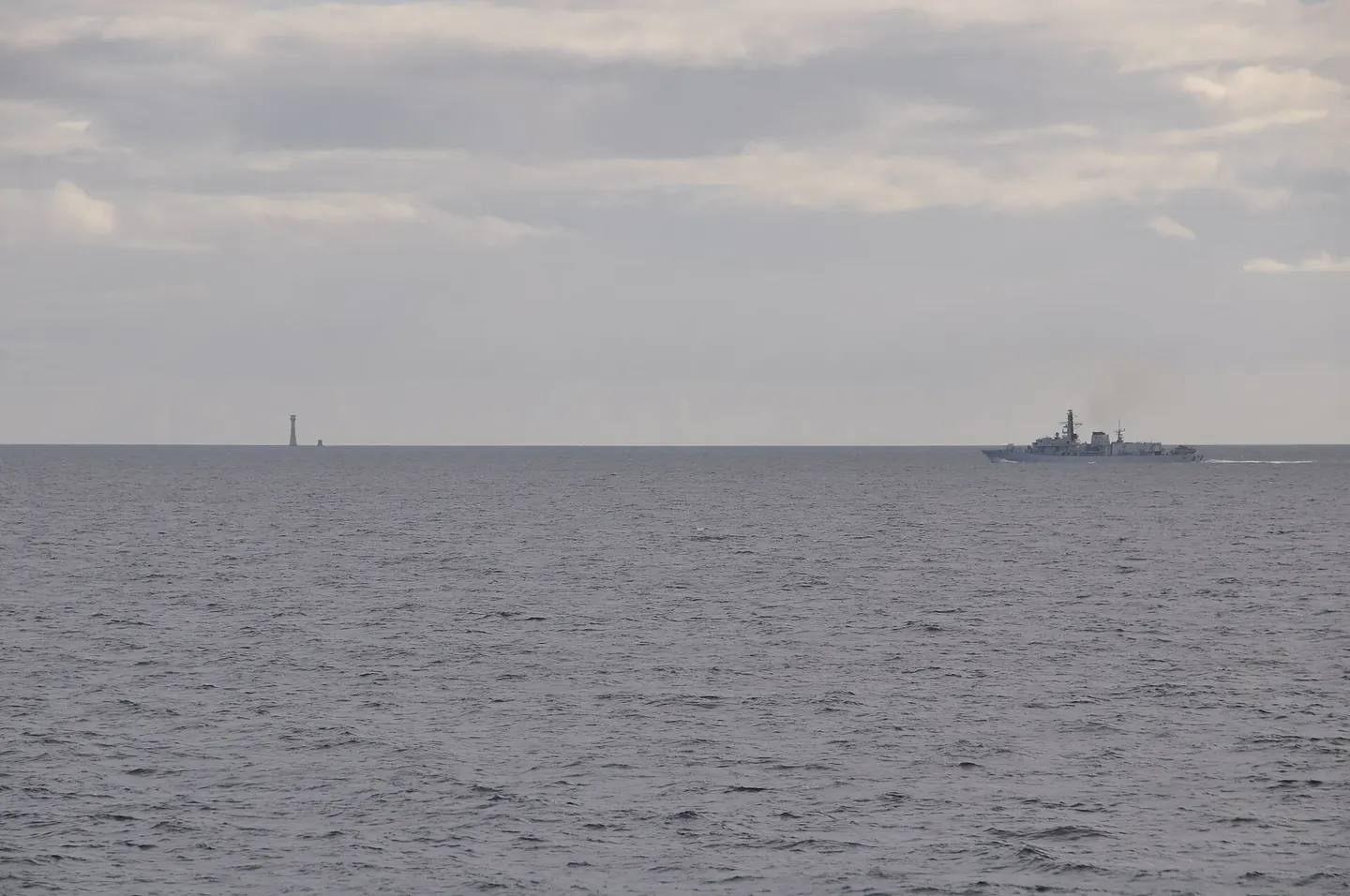
The surviving pieces should be read together: the monument on Plymouth Hoe, the old stump offshore and the operating successor belong to different stages of the same station. A photograph of Smeaton's tower ashore is not a photograph of the present Eddystone light. Likewise, an image of the present tower cannot show the entire history of the reef's occupation.
For a useful comparison with another lighthouse, record the reason for replacement before comparing heights or materials. Ask whether the problem was the building, the supporting ground, the lighting apparatus or a changed service requirement. Those questions make the Eddystone sequence useful beyond a list of famous names. For the construction principles behind masonry joints, continue with stone masonry and tower geometry; that article addresses the building system rather than this site's succession.
Make a replacement ledger, not a league table
A compact research note for Eddystone should give each tower three entries: the documented event that ended its service, the part of the system implicated, and the surviving evidence. For Winstanley, a storm loss is the event; the record quoted here does not separate every possible contribution of form, workmanship and loading. For Rudyerd, the fire belongs to the lantern-and-building system. For Smeaton, the account identifies supporting rock, while surviving masonry offers a different kind of evidence from a written description.
That ledger prevents a misleading comparison between the age of a building and the quality of its designer. Service life is an outcome under particular conditions, not a controlled experiment. A tower lost to fire cannot establish how long its foundations might otherwise have lasted. Equally, moving part of a tower ashore changes its exposure: survival as a monument is not an additional period of service on the reef.
When a museum label or photograph seems to contradict the sequence, first check whether it describes construction, first lighting, replacement, dismantling or relocation. Different dates can identify different events without either source being wrong.