A keeper's appointment and a family's residence are related but different historical facts. A station could operate through a shipping season while children stayed elsewhere for school. A dwelling might house several families at one period and a smaller staff later. To understand domestic life at lights, dates and household arrangements matter more than an image of universal, permanent isolation.
Split Rock: residence followed a seasonal calendar
The Minnesota Historical Society describes Split Rock's early operation as seasonal, from May to December. A keeper and two assistants maintained the station. Before road access, families often made short summer visits and left when school began; keepers joined them after the winter shutdown. This was not the same arrangement as an entire family living on the cliff throughout the year.
The society connects later changes to improved access. A road altered the relationship between the station and nearby communities, making a different domestic pattern possible. The important comparison is therefore between periods at one site, rather than between an allegedly isolated past and a connected present everywhere.
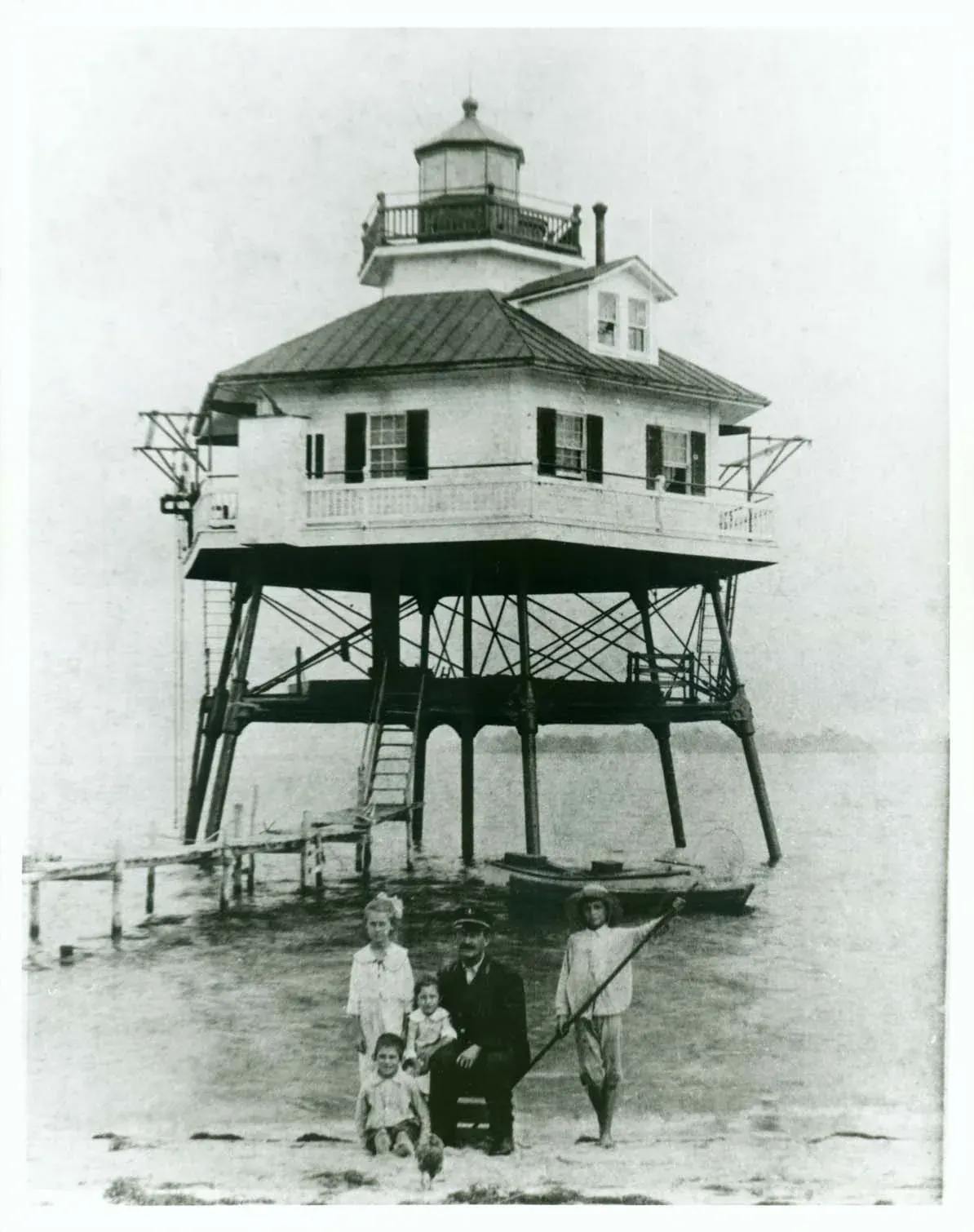
When a family photograph is labeled simply “at Split Rock,” it cannot establish residence duration. A school record, a dated account or correspondence may answer that question. Photographs remain valuable, but their evidence is narrower: they can show who was present on an occasion without explaining where everyone spent the winter.
Schooling by mail was an organized service
Open School BC's official centenary history records the establishment of British Columbia's Elementary Correspondence School in 1919. That September, its 86 students included 13 children of lighthouse keepers. The program originated in requests for educational provision in remote communities; it was not created exclusively for lighthouse families.
This distinction changes the story. The children were participating in a wider public service that addressed distance. Their enrollment shows access to a system, but does not by itself describe daily supervision in each house, the time lessons took to arrive or the educational results of every pupil.
A useful household study would pair the enrollment record with an individual child's dated assignments or family correspondence, where those records are available. Without them, it is better to explain what the program offered than invent a typical morning of lessons beside the lantern.
Accommodation was infrastructure, but not a complete household record
A plan of a keeper's dwelling can reveal bedrooms, shared spaces and the relationship to the working buildings. It cannot tell us who slept in every room for every year. A space labeled as a bedroom might later have served another purpose. An apparently spacious plan says little about heating, furnishings or the distribution of work among residents.
Consider a hypothetical station with three keeper households and one shared landing. Counting the dwellings establishes the designed accommodation, not the number of adults available for a night watch. Employment status, training and the actual roster remain separate questions. Family members should not silently become paid assistants merely because they appear in a photograph near the lamp.
The reverse mistake is to assume that only names on the payroll contributed labor. Family recollections may describe cooking, gardening, teaching or helping with supplies. Such contributions deserve attribution to the particular account, without turning one household's experience into a formal nationwide requirement.
Mail and stores linked different schedules
For a household reached by boat, supplies and correspondence could travel through the same access point while serving different needs. A station's oil requisition belongs to an administrative record; a child's lesson packet belongs to education; a personal letter may explain a visit. Combining them can reveal connections, but each item still needs its own date and context.
A productive timeline places the operating season, school term and known transport dates on separate lines. At Split Rock, that approach explains why the keeper's working year and the children's presence need not coincide. It avoids assuming that every departure was a relief voyage or that every late delivery constituted an emergency.
Keep household change separate from automation
Automation changes the operation of equipment. A staffing decision changes the people stationed there; a residence policy changes who may live in the accommodation. These events can happen in different years. A nationwide end to Canadian staffing cannot be inferred from the 2024 withdrawals: the withdrawal of staff from two sites does not establish the end of staffing nationwide.
When describing the end of a family period, identify the station and the decision actually documented. Do not close every household's story on the date a lamp became automatic. The automation article examines those distinctions; pay and supplies considers employment and provisioning. Here, the central question remains who lived where, at which time, and what evidence supports that answer.
A simple household register can keep these distinctions visible: name the resident, the dated evidence of presence, the paid role if established, and any documented period ashore. Leave unknown entries blank. That method accommodates a visiting child, an appointed assistant and a relative providing informal help without forcing all three into the same category. It also makes later discoveries easier to incorporate without rewriting the entire household as though its membership never changed.