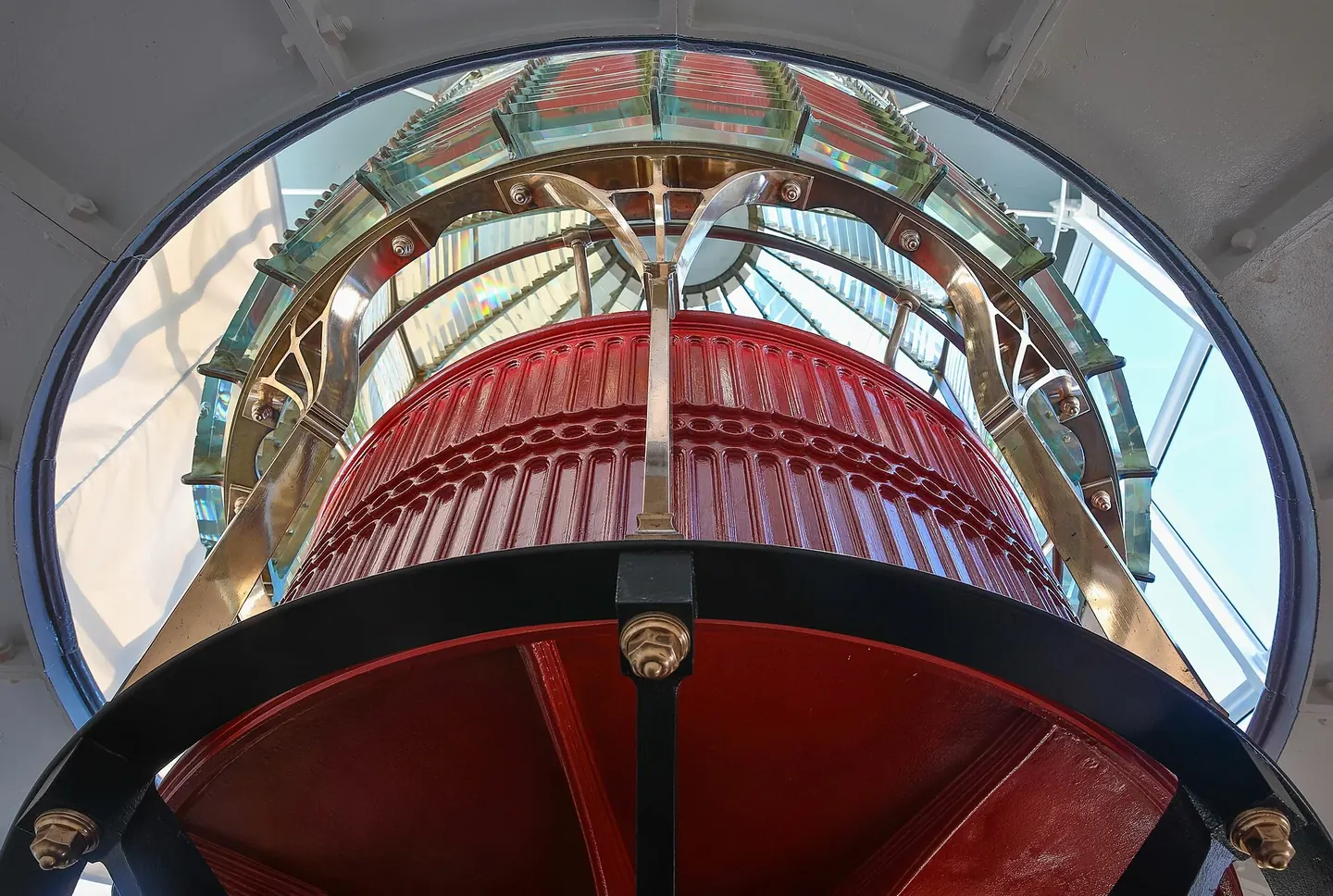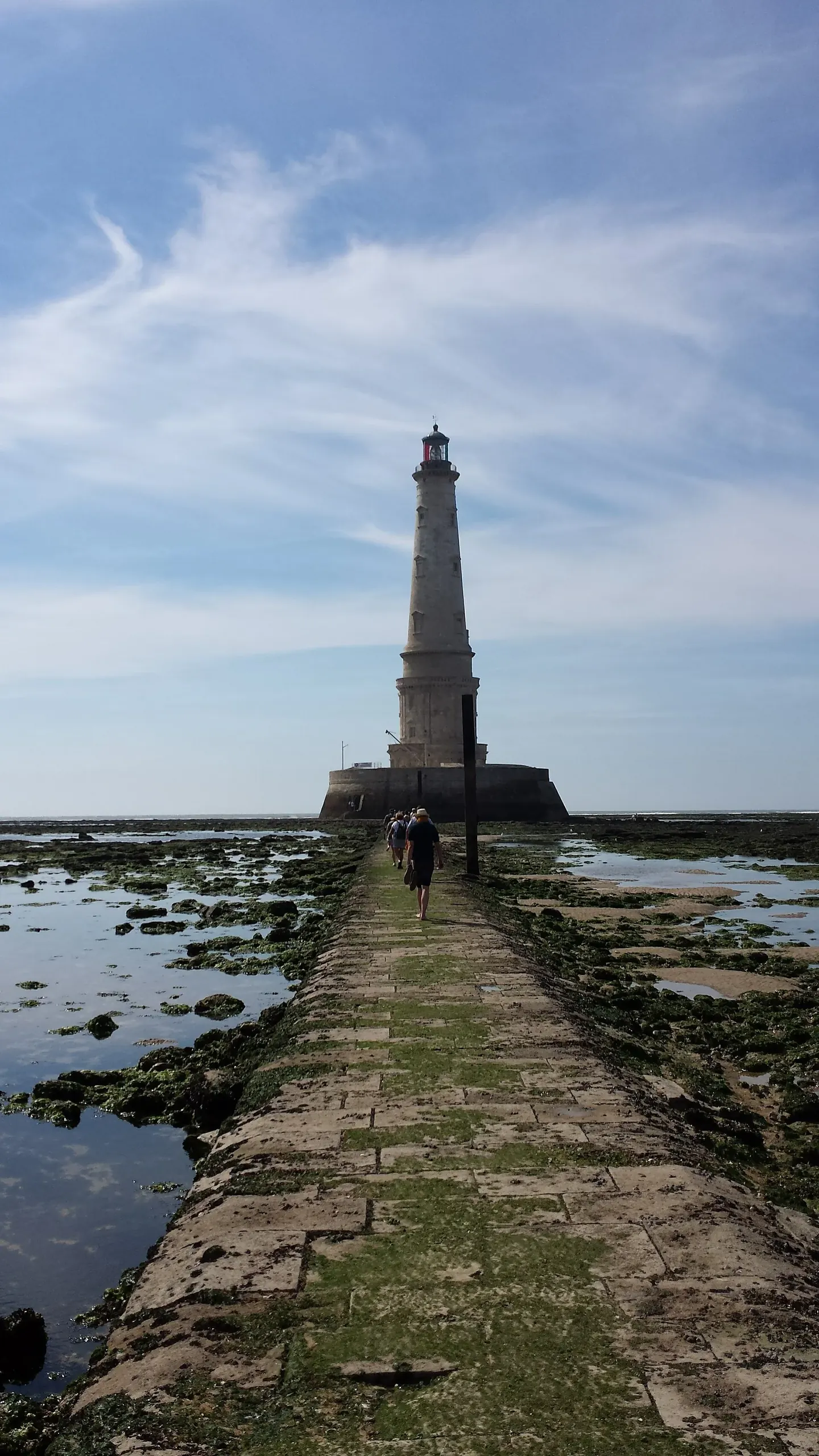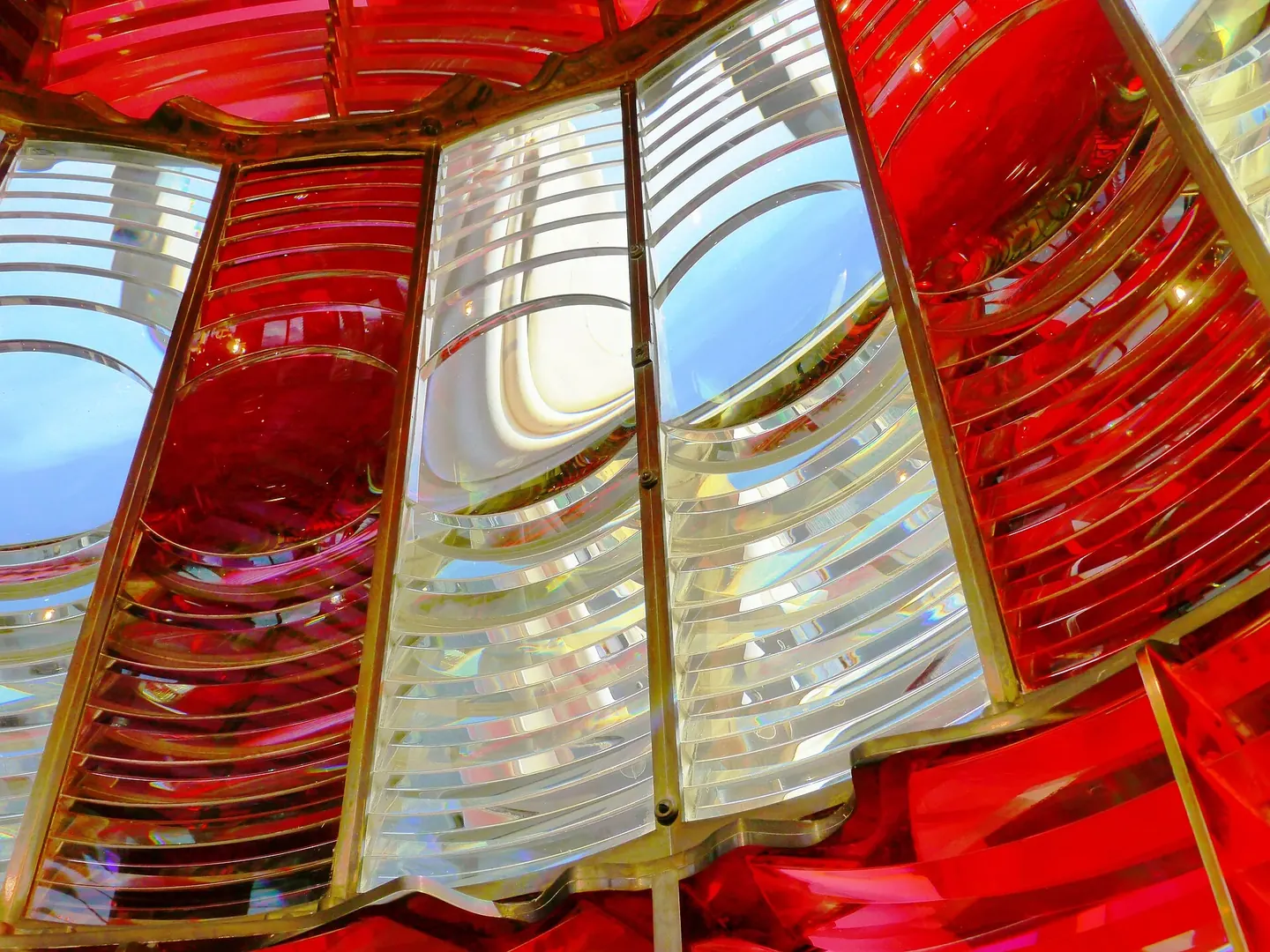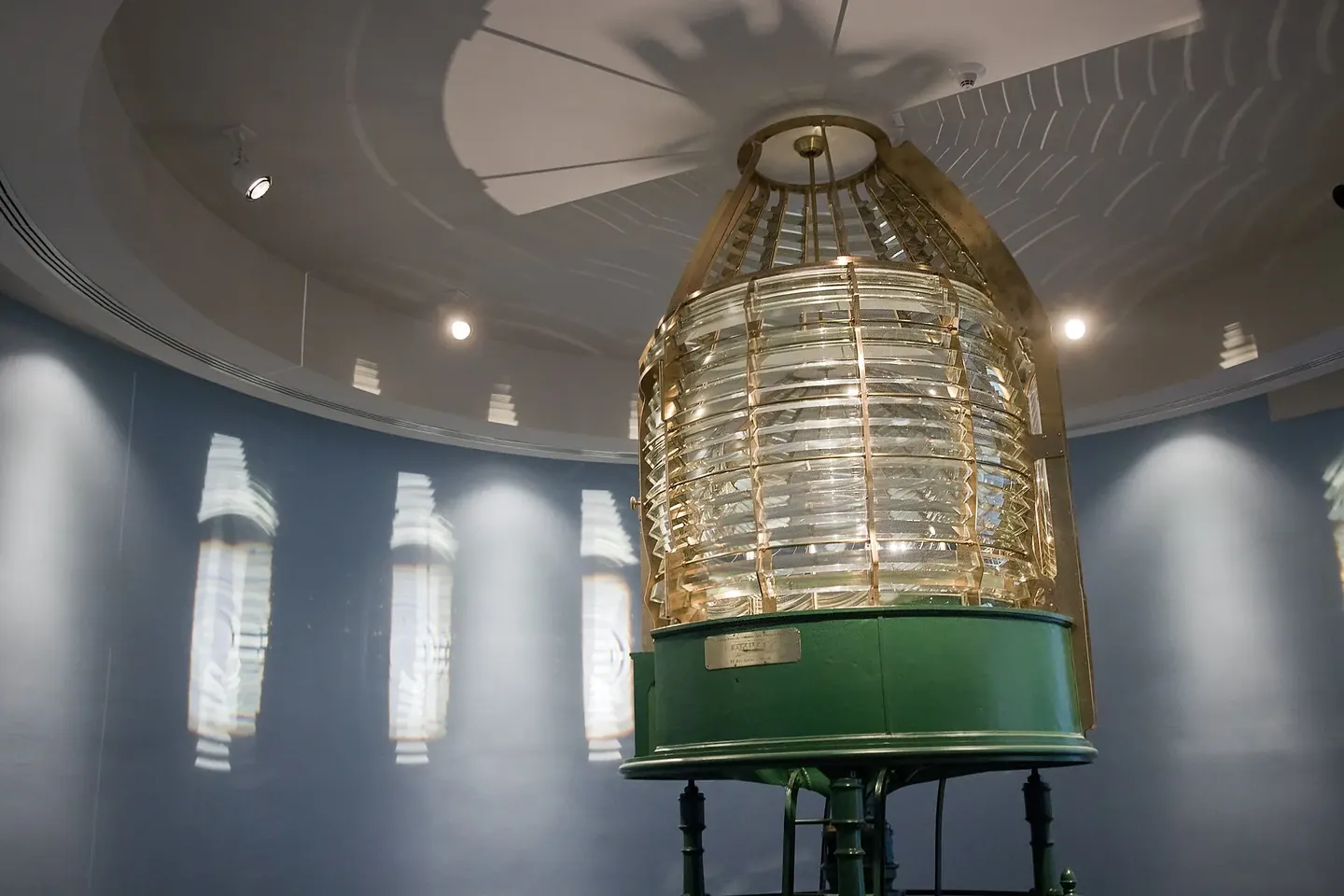
The order of a classical Fresnel lens is a size classification based on focal distance. It is not a brightness grade, a navigation priority or the number of flashes. Understanding that one distinction makes museum labels and station histories easier to compare, especially when a large-looking apparatus is described by an unfamiliar order.
Start with the focal distance
The National Park Service's Old Point Loma history gives focal distances of 920 millimetres for first order, 700 for second, 500 for third, 375 for third-and-a-half, 250 for fourth, 187.5 for fifth and 150 for sixth. It presents these as seven classes, including the intermediate third-and-a-half.
The number therefore runs in the opposite direction from a casual expectation: first order is larger than sixth within that series. A label saying third-and-a-half identifies an intermediate size; it does not mean an apparatus has half a missing panel or an incomplete third-order assembly.
Keep the measurement separate from the overall object
Focal distance concerns the relationship between the source position and the optic. It is not the full height of the assembled lens, pedestal and framework. Different arrangements can have the same focal-distance class while differing in their vertical extent or their fixed and revolving configuration.
For a museum measurement, identify exactly what was measured: glass, frame, complete apparatus or display base. A visitor's photograph beside a lens is a useful indication of scale but a poor substitute for a dimension with a stated boundary. An order alone cannot tell a conservator the size of the doorway needed to move every component.
Size is not a guarantee of range
A larger apparatus can gather and direct light differently, but its order does not supply the lamp's intensity, the flash duration, atmospheric visibility or the observer's horizon. A range quoted for one first-order installation should not be assigned to every first-order lens. The complete station and apparatus need their own specification.
Consider two hypothetical optics of the same order, one showing a fixed distribution and another producing concentrated beams as it turns. Their shared focal-distance class does not make their appearance identical. A different source or operating arrangement adds further variables. This comparison is conceptual, not a reconstruction of named equipment.
Old Point Loma: an intended order and an installed order
The NPS historical study describes confusion over the size intended for Point Loma during procurement and administrative changes. The station ultimately received a third-order apparatus. Earlier references to a first-order system therefore cannot simply be read as a description of what stood in the completed lantern.
This case supplies a practical reading rule: distinguish a proposal, purchase order, shipment and completed installation. A drawing can show a planned size that changed before service. A later inventory can record a replacement. Apparent disagreement may reflect the sequence, rather than careless terminology in every source.
Do not turn common uses into a rigid hierarchy
Large orders are associated with many coastal and landfall installations, and small ones with many local aids. Those associations are not a rule that a harbor task is less demanding or that every cape needs the largest optic. The required signal, site, source and service arrangements determine the actual choice.
Likewise, an old staffing establishment linked to particular equipment does not establish the personnel at every later station with that order. Staffing changes through time, and automation can alter duties without changing the historic lens. Use an appointment roster or station record for the human question.
What about lenses larger than first order?
Historical optics also include larger special classes described as hyper-radial and meso-radial. They should be identified by a reliable object or manufacturer record rather than treated as extra members silently appended to the ordinary first-to-sixth series. Global production totals, first-installation claims and the dates of surviving examples require their own evidence.
A station's establishment year is not automatically the date of its surviving optic. For a special-size lens, identify the object, maker and installation evidence before attaching a date. A catalogue should keep earlier proposals and later replacements separate. A size guide does not need an unsupported world total to explain how a focal-distance classification works.
Compare dimensions on the same scale
If a drawing places two orders side by side, use one scale and identify whether the frames are included. Enlarging a small lens photograph to fill the same box as a large lens can conceal the very size difference the label explains. Conversely, a large pedestal can make the smaller optic seem taller. A shared scale bar and a stated measurement boundary make the comparison reproducible without supplying an unsupported range or weight.
Five entries for a useful collection label
Record the order, configuration, manufacturer if established, original station and dated operating period. Add which components survive and whether the object is displayed in its service arrangement. Mark unknown provenance explicitly instead of inferring a maker from the order.
Those entries let readers compare actual instruments. The optical explanation covers beam formation; conservation covers project decisions. The order supplies one meaningful measurement within those broader histories, rather than a promise about brightness, importance or preservation cost.