Fresnel's rollers
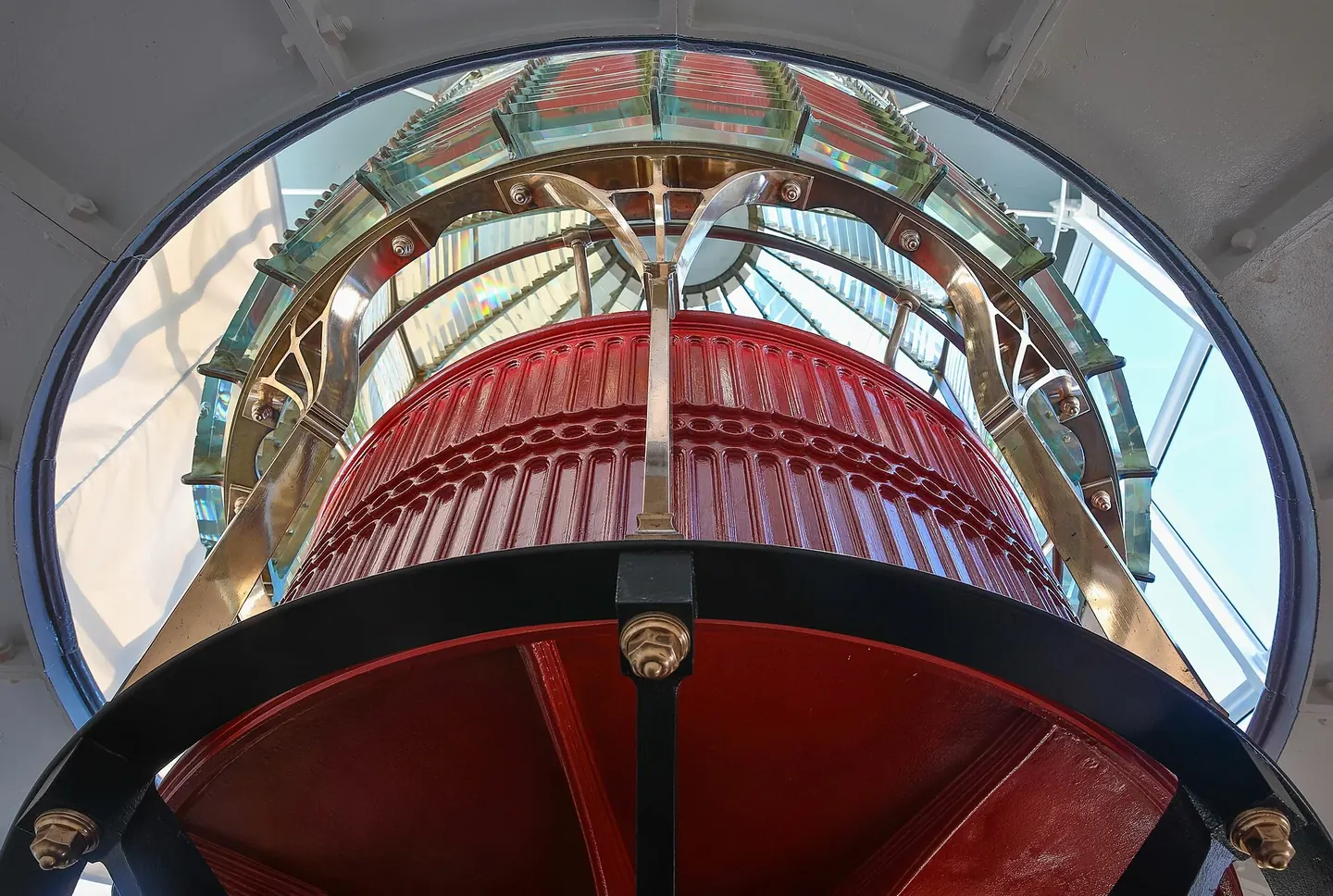
When Augustin Fresnel designed his first revolving lens in 1822, he mounted it on small wheels about five inches in diameter, which acted as roller bearings supporting the lens assembly. He described them plainly in his first paper: "This apparatus can easily be turned around its axis on the column by means of rollers, which move upon a circular projection on top of the pedestal." When his lenses reached Scotland, England and America, the vocabulary changed — the roller assembly became the "chariot," and the rollers "chariot wheels" — but the mechanism did not. A steel ring on the lens base rested on the wheels; the wheels ran on a steel track set into the pedestal; and horizontal guide rollers bore against the central pivot shaft to keep the whole assembly from drifting sideways.
The tyranny of friction — and the clockwork that fought it
Friction set the first flashing lights' rhythm. Thomas Tag's technical history for the U.S. Lighthouse Society records that early revolving lenses, dragged by friction and driven by weak clockwork, turned about one revolution in eight minutes: a flash lasting twenty seconds or more, separated by intervals of nearly a minute. The first fixes were crude — more bull's-eye panels, larger clockworks. With twenty-four-panel lenses and heavyweight machines, flash duration came down to about five seconds with fifteen seconds between flashes. The drive itself changed little in principle: a falling weight, geared down through a train and governed to constant speed, turned the lens. At Boston Light, keepers wound the clockwork weights by hand every four hours until the drive was electrified in 1948.
American engineer David Heap, assigned to the Third District depot, went after the support instead of the motor. In 1893 he tried ball bearings, but without substituting them throughout the assembly friction persisted and the design was not put into general use. In 1895, Trinity House built a giant six-foot ball-bearing assembly with two-inch balls for a first-order lens; it produced too much friction and was abandoned. Heap's 1898 redesign finally made the concept work by fitting thrust and guide ball bearings throughout the supports of third-, fourth- and fifth-order lenses. The new fourth-order bearing was first installed at Romer Shoal, New York, where rotation speed reached one revolution every twenty seconds; a third-order version followed at the Sturgeon Bay Ship Canal light in Wisconsin in 1899.
The mercury bath
The decisive idea was older than all of it, and it came from Fresnel himself. In a letter of 19 April 1825 he proposed to "float our rotating devices, of the first order, in a bath of mercury, instead of placing them on rollers" — adding that since he had not yet executed the project, he would not require its adoption. Nobody did, for sixty-five years. Not until 1890 did Léon Bourdelles, chief engineer of the French Lighthouse Service, design a workable mercury flotation system. It was tested at La Teignouse in 1892 and first installed at Cape La Heve in 1893; Scotland followed in 1898, and Dr. John Hopkinson of Chance Brothers refined the design further.
America converts, slowly
The United States adopted mercury flotation on its own schedule. One of the earliest installations went into the Cape Charles lighthouse in 1895. The first mercury float built in America — pedestal, clockwork case and all — was tested at the Tompkinsville depot and installed at the Ashtabula Harbor light, Ohio, in 1915; its test numbers capture what mercury meant. Without mercury, 200 pounds of force was the least needed to start the lens turning; with mercury, 75 pounds sufficed. The largest float and pedestal built in the country, some 6,000 pounds, went into Cape Fear light station on 22 May 1920, replacing a chariot that had been in constant service since the station opened in 1903.
Separate support, drive and speed control
A bearing supports and guides the moving assembly; the drive supplies motion; a governor or control arrangement regulates speed. Reducing friction changes the work demanded of the drive, but it does not by itself define the flash character. Panel arrangement and rotation speed together determine how the beam passes an observer.
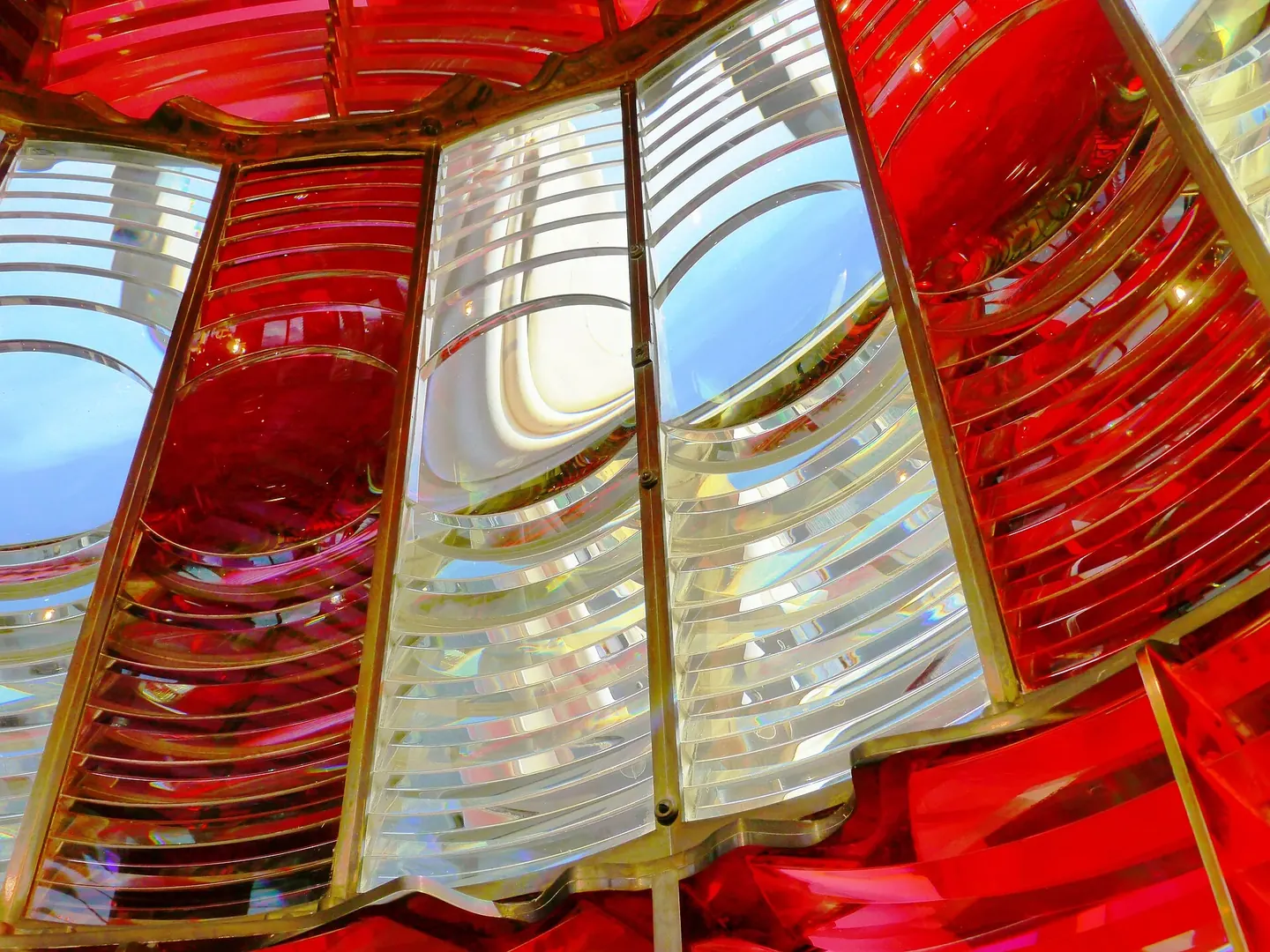
As a teaching example, imagine four equally spaced beams rotating once per minute. A fixed observer could encounter a beam every fifteen seconds under the simplified arrangement. That arithmetic does not establish the duration or intensity of a real flash, and unequal panel spacing can produce grouped patterns. The calculation separates the mechanism's period from the signal seen at one location.
A modern change can preserve the old apparatus differently
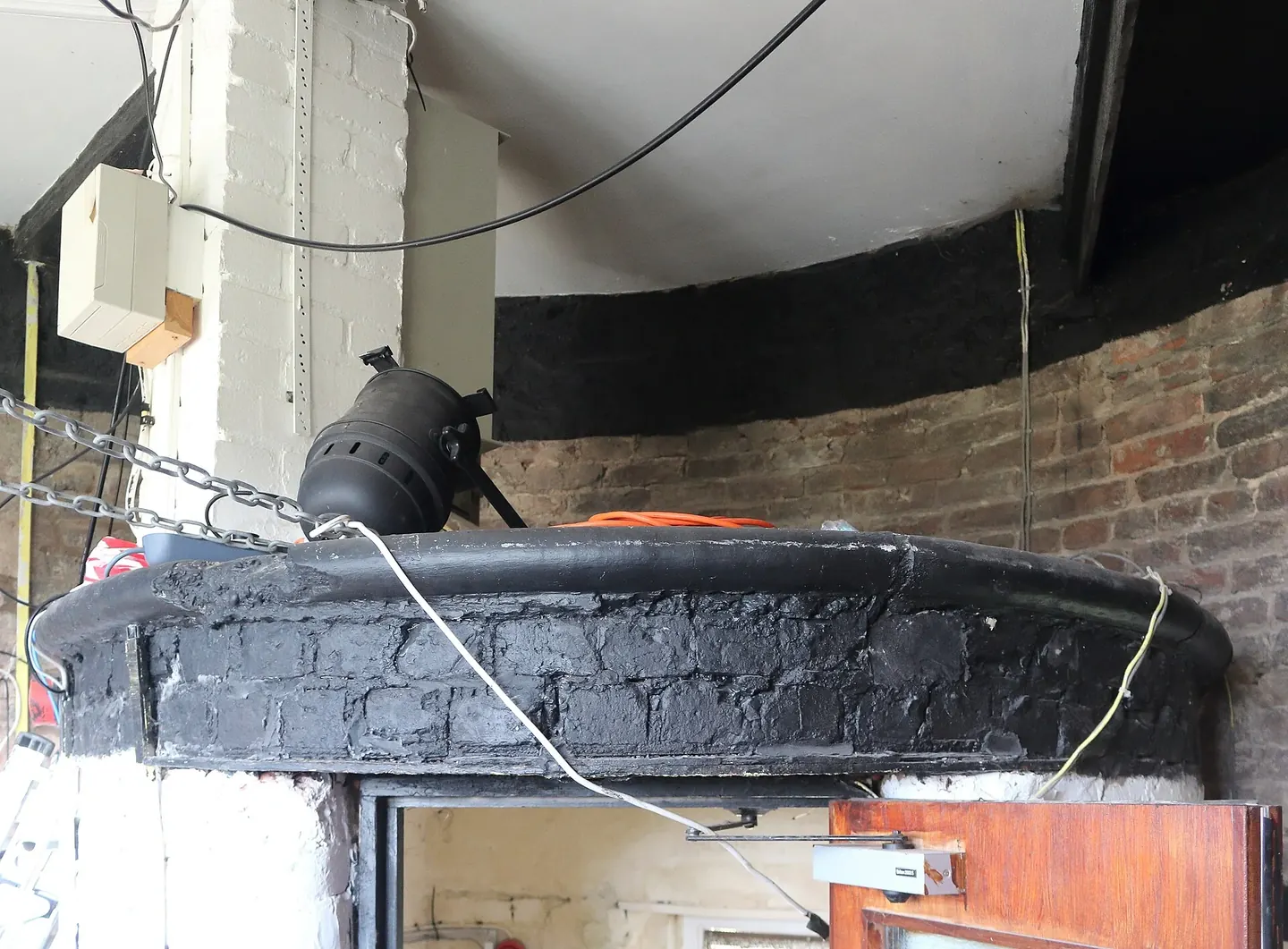
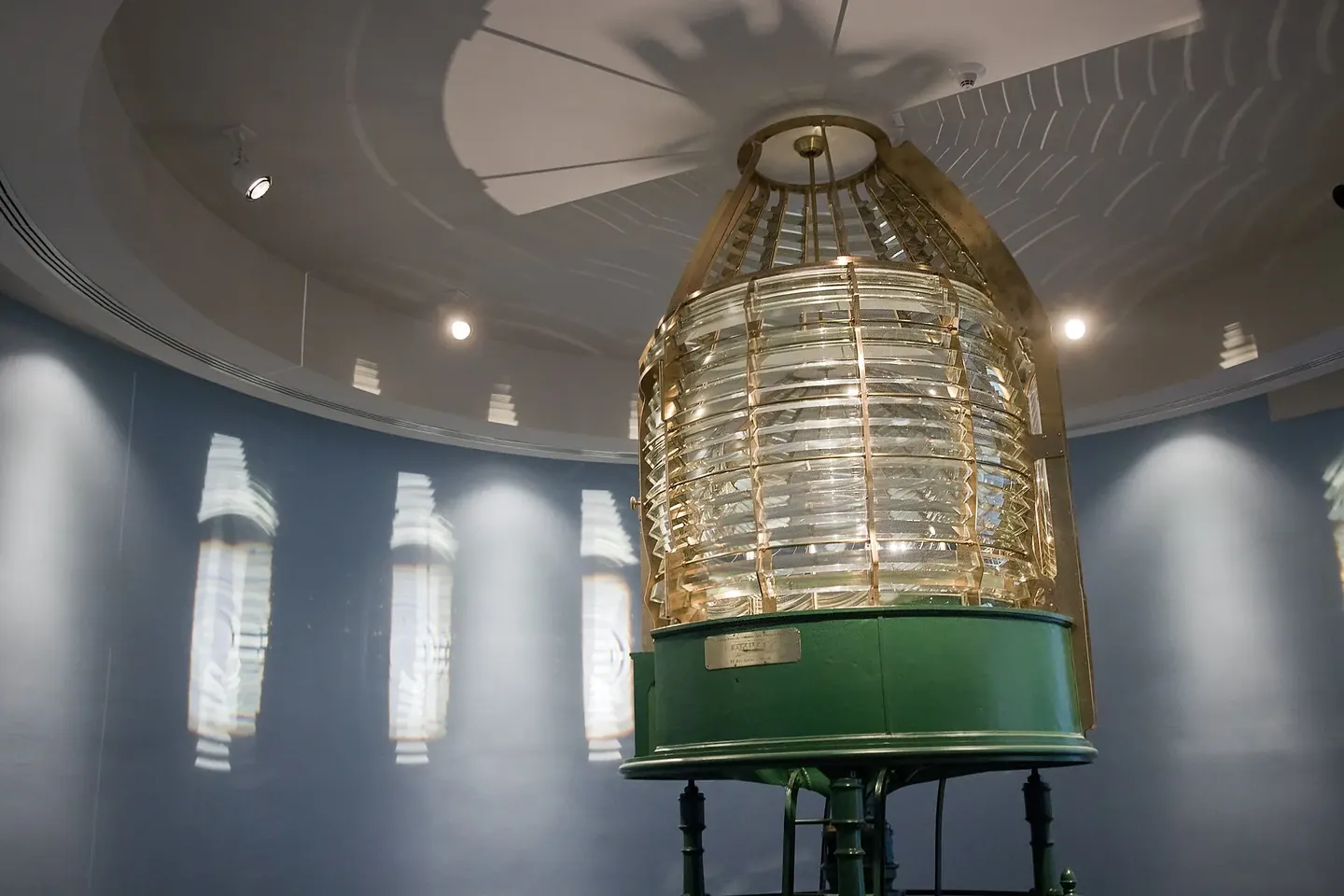
Irish Lights records leaving Fastnet's Fresnel lens in place after decommissioning it in 2018, removing the mercury and providing a new LED light. A preserved lens and its former float basin are therefore not evidence that mercury remains in service. The object's condition and present arrangement need current records.
Historic descriptions of handling mercury are not instructions for museum staff or visitors. This article explains a mechanical principle; it does not prescribe cleaning, filling or exposure control. Those decisions belong to qualified conservation and hazardous-material professionals using the site's actual assessment.
A useful display labels the supporting bearing, the drive and any parts removed during preservation. That lets the mechanism be understood without claiming the original system remains complete or operational merely because its exterior survives.