The relief that found an empty station
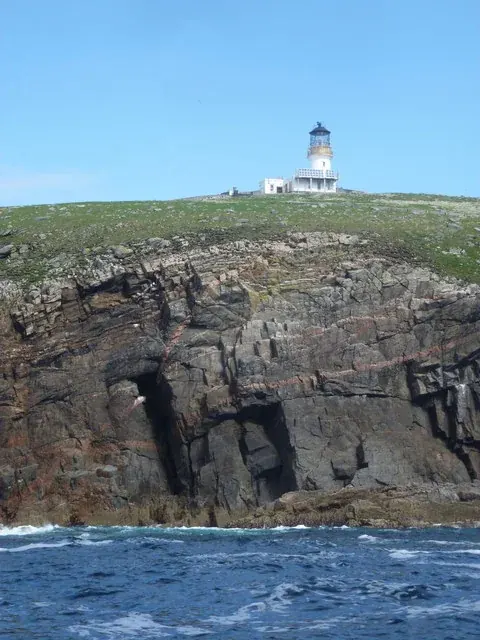
The Hesperus — a lighthouse tender of the kind described in our piece on the ships that served the lights — anchored off Eilean Mòr at noon on Boxing Day, 26 December 1900. No flag flew; the landing stage held no boxes ready for exchange; the whistle and siren drew no answer, and neither did a rocket fired from the ship. Joseph Moore was put ashore alone. He found the entrance gate and the outer doors closed, the kitchen door open, the fire not lit for days, the beds empty "just as they left them in the early morning," and the clock stopped. In the lightroom everything was in proper order: the lamp cleaned, the oil fountain full, the blinds on the windows. Moore reported back; volunteers from the tender's crew — the buoymaster MacDonald and two seamen — stayed with him to keep the light, which was lit at the proper time that night. Captain Harvie's telegram to the Board carried the first, and in many ways still the truest, summary of the case: "A dreadful accident has happened at Flannans. The three Keepers, Ducat, Marshall and the occasional have disappeared from the island… The clocks were stopped and other signs indicated that the accident must have happened about a week ago. Poor fellows they must been blown over the cliffs or drowned trying to secure a crane or something like that."
What the log actually contains
The file is unusually good on one point where the legend is flatly wrong: the paperwork the men left behind. The last written entries in the station log were for 13 December, and they recorded poor weather — nothing more remarkable than that. The particulars for 14 December, the time the light was extinguished on the morning of the 15th, and the barometer, thermometer and wind readings taken at nine that morning were noted on the slate, ready to be transferred to the log; the last entry on the slate, in Ducat's hand, was made on the morning of Saturday 15 December. The forenoon's work was complete — the lamp trimmed, the oil fountains and canteens filled, the lens and machinery cleaned, the pots and pans washed and the kitchen tidied. From this the investigators drew a plain inference: the men disappeared on the afternoon of Saturday, 15 December. There are no prayerful entries, no account of a storm that lasted twenty days, no evidence of a meal abandoned mid-course. The "strange log" of the legend was the invention of a later era — Wilfrid Wilson Gibson's 1912 poem Flannan Isle and the fiction that followed it — while the Board itself has always been explicit that it can only report what was recorded at the time. The slate-on-the-wall system that carried those final readings is the same daily paperwork routine described in our piece on the keeper's working day, and the same discipline visible in the weather records keepers were required to log.
The superintendent's findings
The clothing told its own part of the story. Ducat had gone out in sea boots and a waterproof coat, Marshall in sea boots and oilskins — the gear, as Moore attested, that they wore only when going down to the landings. McArthur's wearing coat was left behind: he went out in his shirt sleeves. Muirhead rejected the alternative that the westerly gale had simply blown the men off the island: the wind would have carried them up its slope, not down to the sea. His conclusion, in the report of 8 January 1901: the three had gone down together that afternoon to the vicinity of the west landing, probably to secure the box of mooring ropes against the weather, and "an unexpectedly large roller" had come up the island, and "a large body of water going up higher than where they were and coming down upon them had swept them away with resistless force." No bodies were ever recovered. As the Board has said of the case since, three keepers lost their lives and their families never learned their fate — the record's one permanent, undecorated gap.
Read the documents in the order they were made
The superintendent's later report interpreted the earlier observations and the damaged western landing. The order matters: a preliminary telegram and a later investigation do not have the same information available.
In particular, a proposed explanation is not an eyewitness account of the disappearance. The observations can support a likely sequence without establishing the precise movements of all three men. A statement that they were swept away should retain its status as the investigator's conclusion, not be rewritten as something the relief crew saw happen.
A small evidence table can keep the uncertainty useful
Separate a recorded observation, the person making it and the inference drawn from it. Cleaned equipment is an observation about the station found by the relief; a proposed afternoon of disappearance is a chronological inference; an exact final conversation would be an unsupported invention. An uncertain event does not make all three kinds of statement equally plausible.
The distinction also prevents fiction from moving backward into the file. A later poem or film is evidence of how the event was imagined. It cannot supply a missing log entry. The Board's current publication is the appropriate starting point for the documents, while the final fate remains unresolved at the level the evidence permits.