Replacing a lighthouse’s old optic with a modern LED lantern can look like a simple lighting upgrade from a distance. In practice, it is an engineering decision about the service a station must provide, the electrical system that supports it, how failures will be detected, and what historic equipment can be removed. Trinity House’s 2019 project at Berry Head in Devon offers a documented example of one approach. It is a case study, not a blueprint for every lighthouse.
One station, a defined navigational job
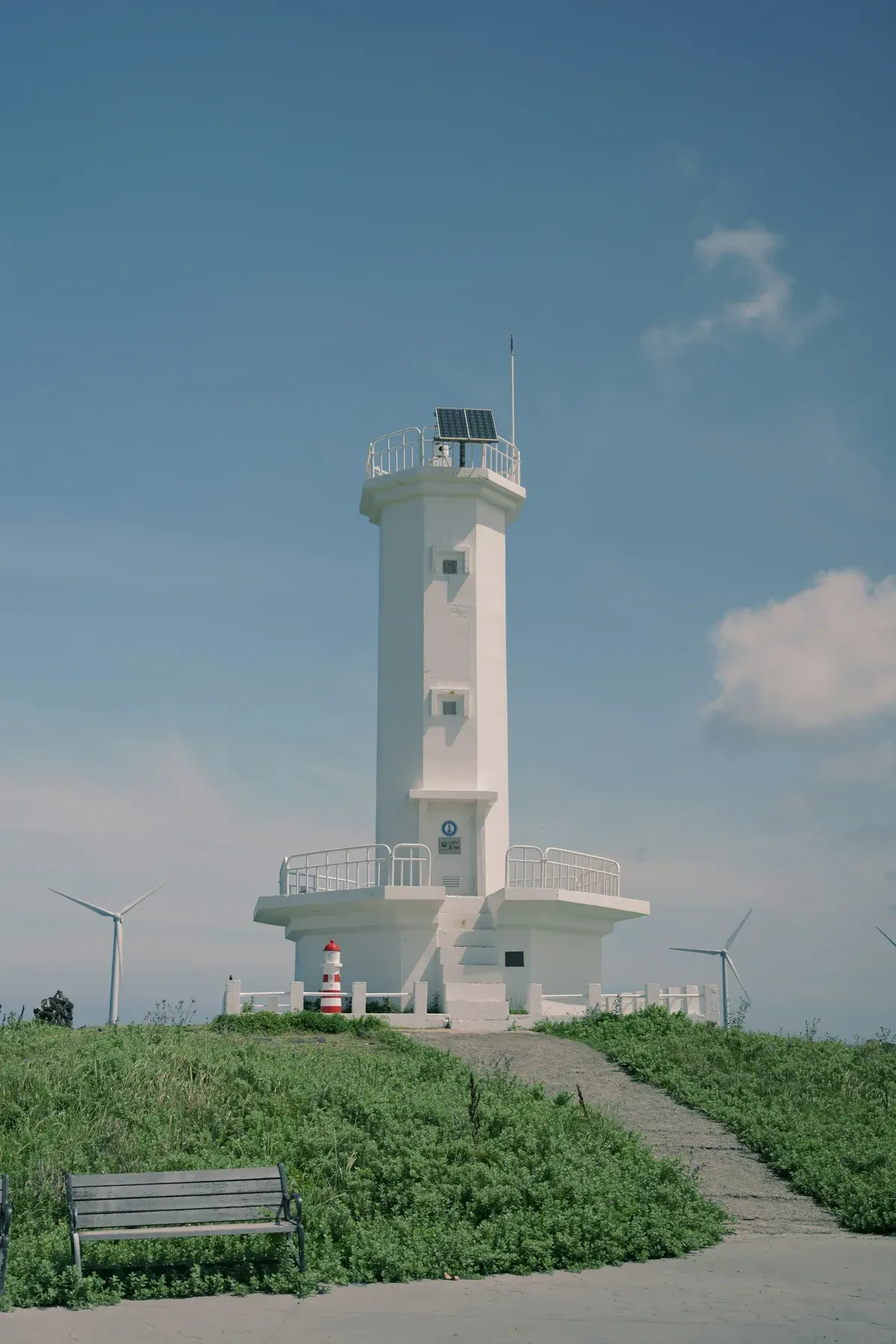
Berry Head Lighthouse stands on a limestone headland near Brixham, above steep cliffs. Trinity House says the tower was built in 1906 as part of a chain of south-coast beacons, became unwatched in 1921 and had most recently been modernized in 1994 before the later project. By 2019, the authority was applying a “simple lighthouse” scheme intended for suitable mains-powered, shore-based stations.
The qualification “suitable” is important. Trinity House described the scheme as appropriate where self-contained LED lanterns can meet the station’s requirements and where additional aids—such as sector lights or hazard-warning systems—are not required. A light with special sectors, an integrated fog signal, a large historic optic or difficult power supply may present different constraints. A designer must first understand the signal’s role and the surrounding navigational system; choosing a lamp by its energy use alone would not answer that question.
What changed at Berry Head
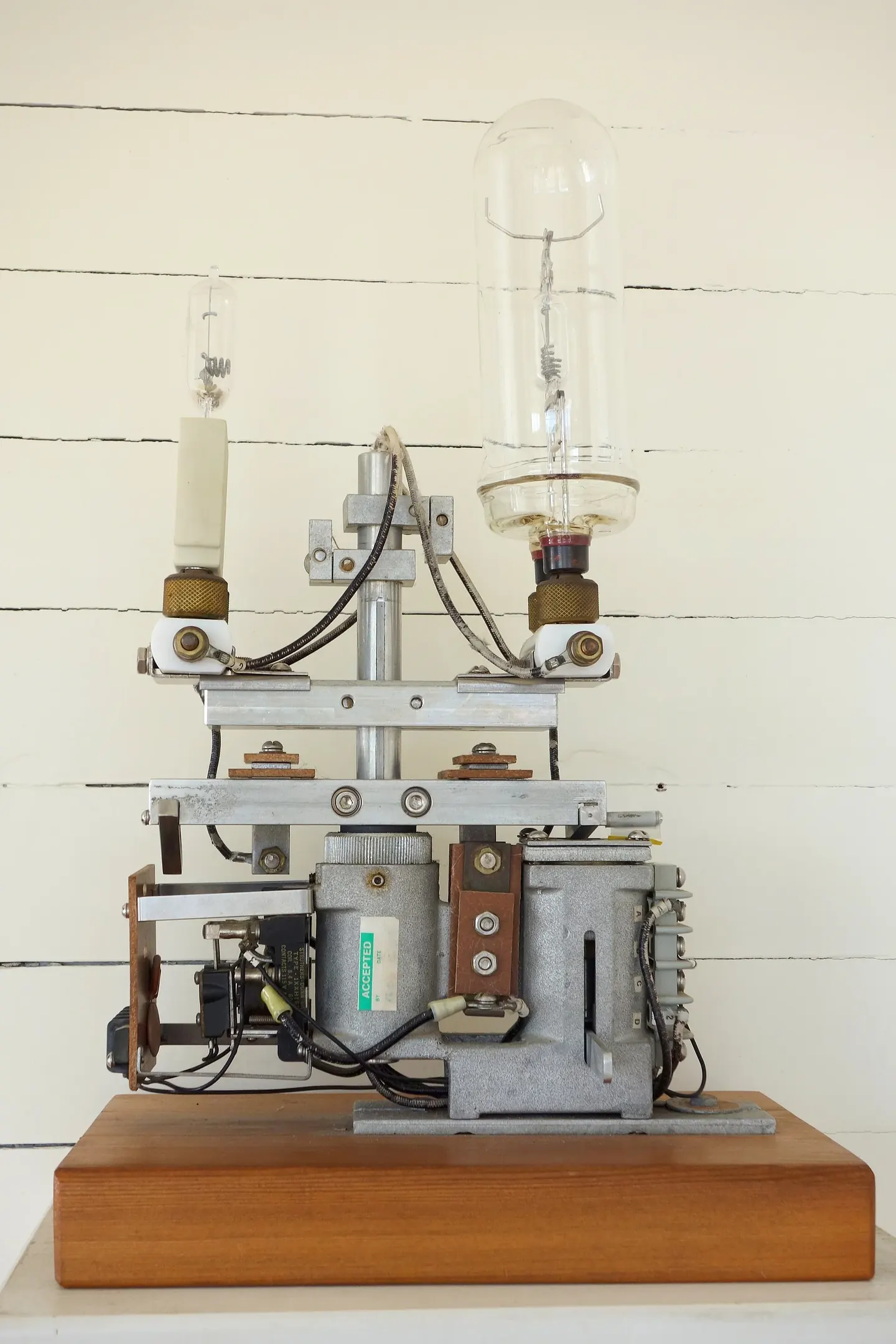
The modernized station uses a main and a standby navigation light, both in self-contained LED lanterns. Trinity House’s description also lists two battery systems, protection and monitoring, telemetry and a lantern control system. The arrangement gives the station more than a new source of light: it combines the primary signal, backup power, condition reporting and control into a service package that the authority can inspect and maintain.
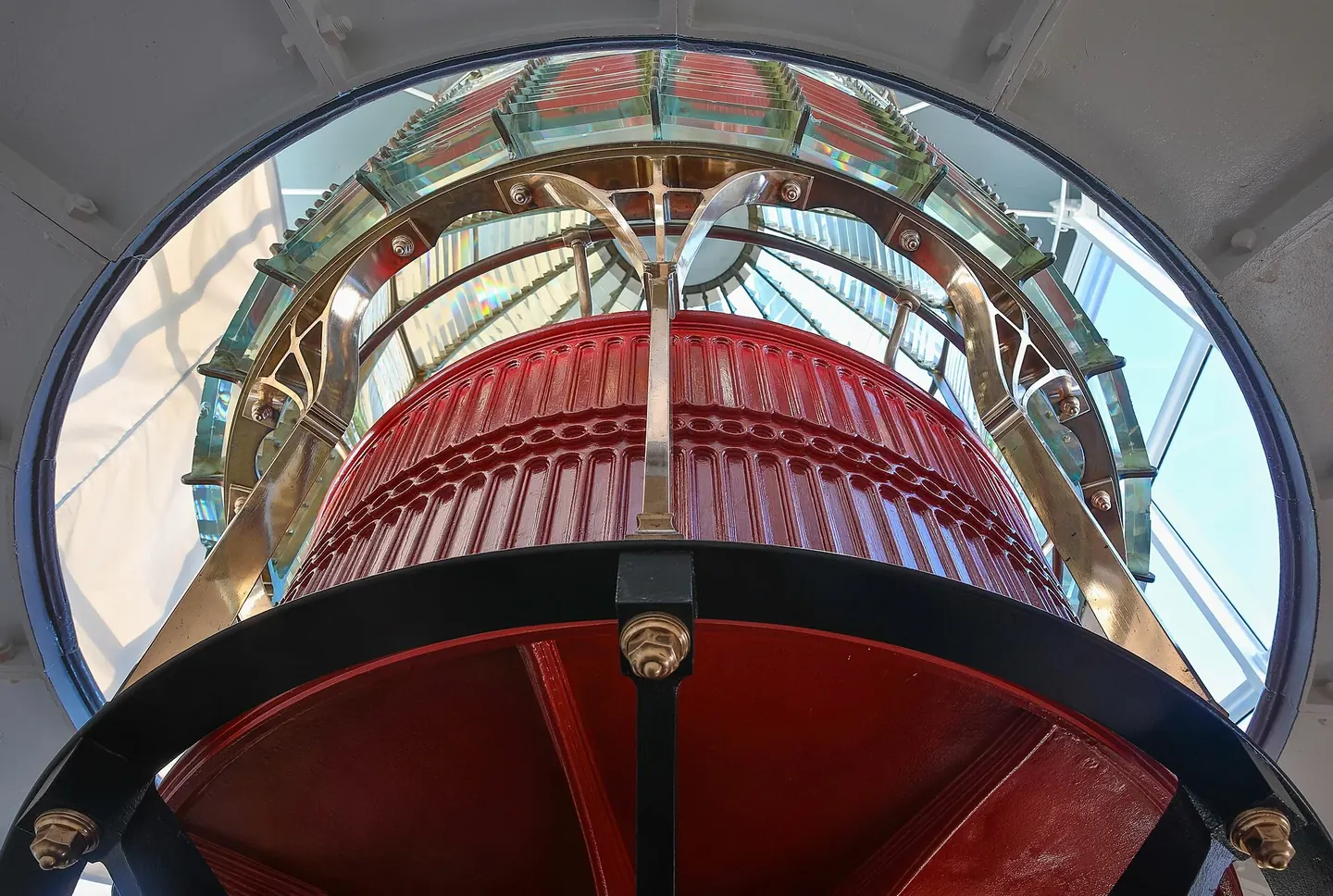
The change had visible consequences. Trinity House reports that the nominal range changed from nineteen to eighteen nautical miles, and that the third-order optic and a roof-mounted emergency light were removed. It also says that the station’s characteristic—two white flashes every fifteen seconds—would continue. The exact range and rhythm belong to this station’s published specification; they are not universal values for LED lighthouse conversions.
The third-order optic was a substantial historic component, and taking it out was part of this particular re-engineering. That should not be generalized into a rule that historic optics are obsolete or should be discarded. A lens can have heritage significance, can remain in use at another station, or can be conserved and displayed after removal. Decisions need to balance the required navigational performance with the condition, significance and future treatment of the historic apparatus.
Reliability is a system property
An LED source may use less power than an older lamp, but reliability depends on more than the emitter. A station still needs suitable power, reserve capacity, controls, monitoring and a plan for maintenance. At Berry Head, the two-battery arrangement and main/standby lanterns are documented parts of the installation. Telemetry gives the shore organization information about the equipment without requiring a person to live at the station. The project description links the new controls and power system to simpler inspections and fewer or shorter visits.
Energy, access and environmental effects
Trinity House says the Berry Head upgrade reduced energy use through LED lighting and removed mercury, oils and lubricants from the station’s equipment. It also describes an expected service horizon of another twenty years under its standards. These are the authority’s stated outcomes for this project. They should not be converted into a universal claim that every LED conversion will achieve the same lifespan, energy reduction or environmental benefit.
Questions to ask before modernizing
A responsible project begins by documenting what the station must do. Which light characteristic and range are required? Are there sectors, emergency signals or other aids associated with it? What is the existing optic’s condition and heritage value? What power source is available, and what backup is needed? How will status information reach the maintenance team? Can equipment be reached safely for repair, and what happens if a control, battery or communications link fails?
A before-and-after record that includes the tradeoff
Put the old and new light arrangements beside the required service. At Berry Head, the published range changed while the identifying rhythm continued. The upgrade therefore cannot be summarized as brighter light with less electricity: it was a revised system that the authority judged suitable for its task.
Then separate an intended service horizon from an observed lifetime. The twenty-year objective in the 2019 announcement does not establish twenty years of fault-free operation, nor does it state that no battery or component will be replaced. Those claims would require maintenance and performance records collected after commissioning.
For a heritage comparison, also ask where removed equipment went and what documentation accompanies it. The announcement establishes removal, not every later conservation outcome. A complete project history would connect the engineering change with the retained object's custody rather than assuming removal means either destruction or successful museum display.