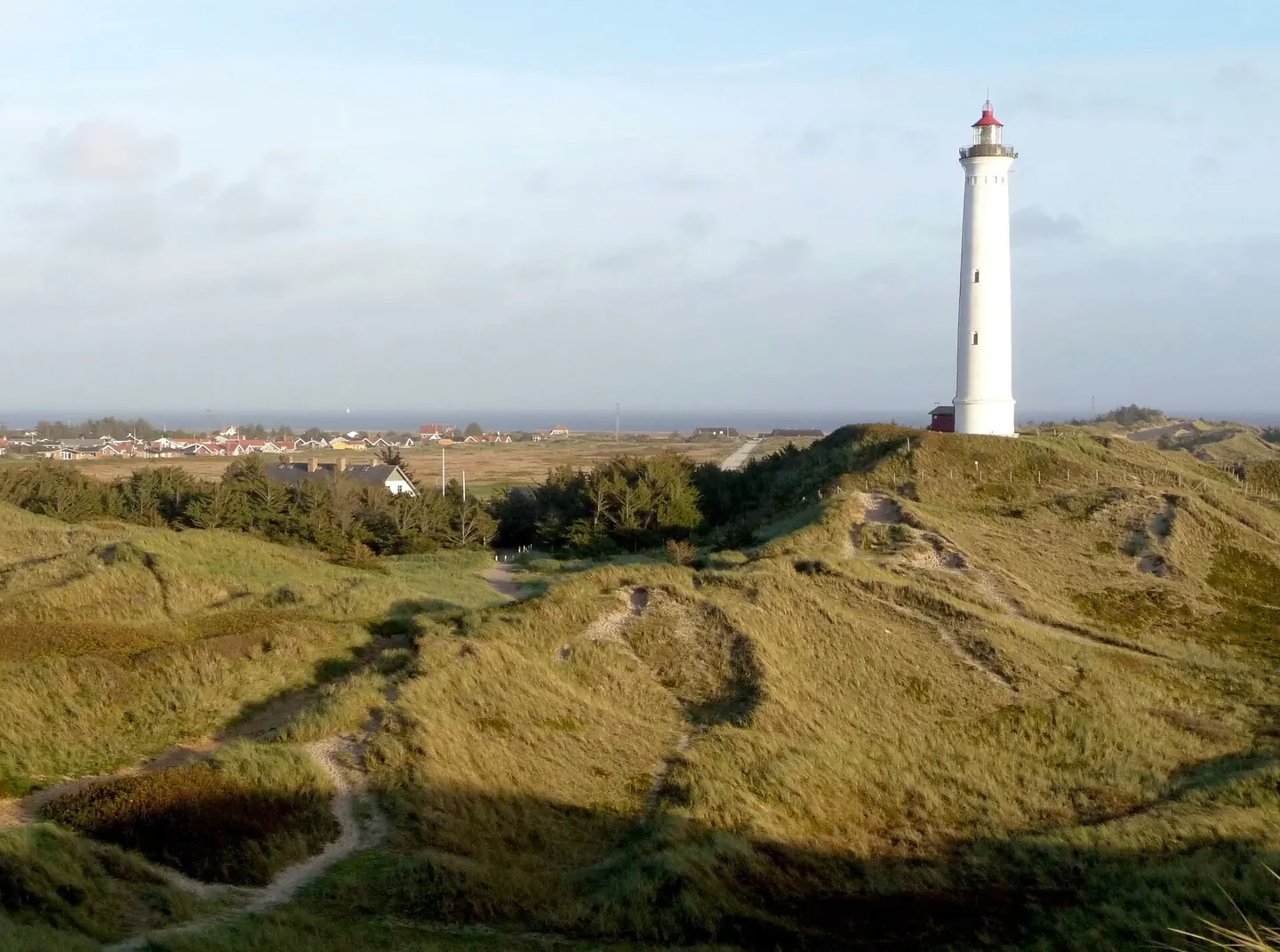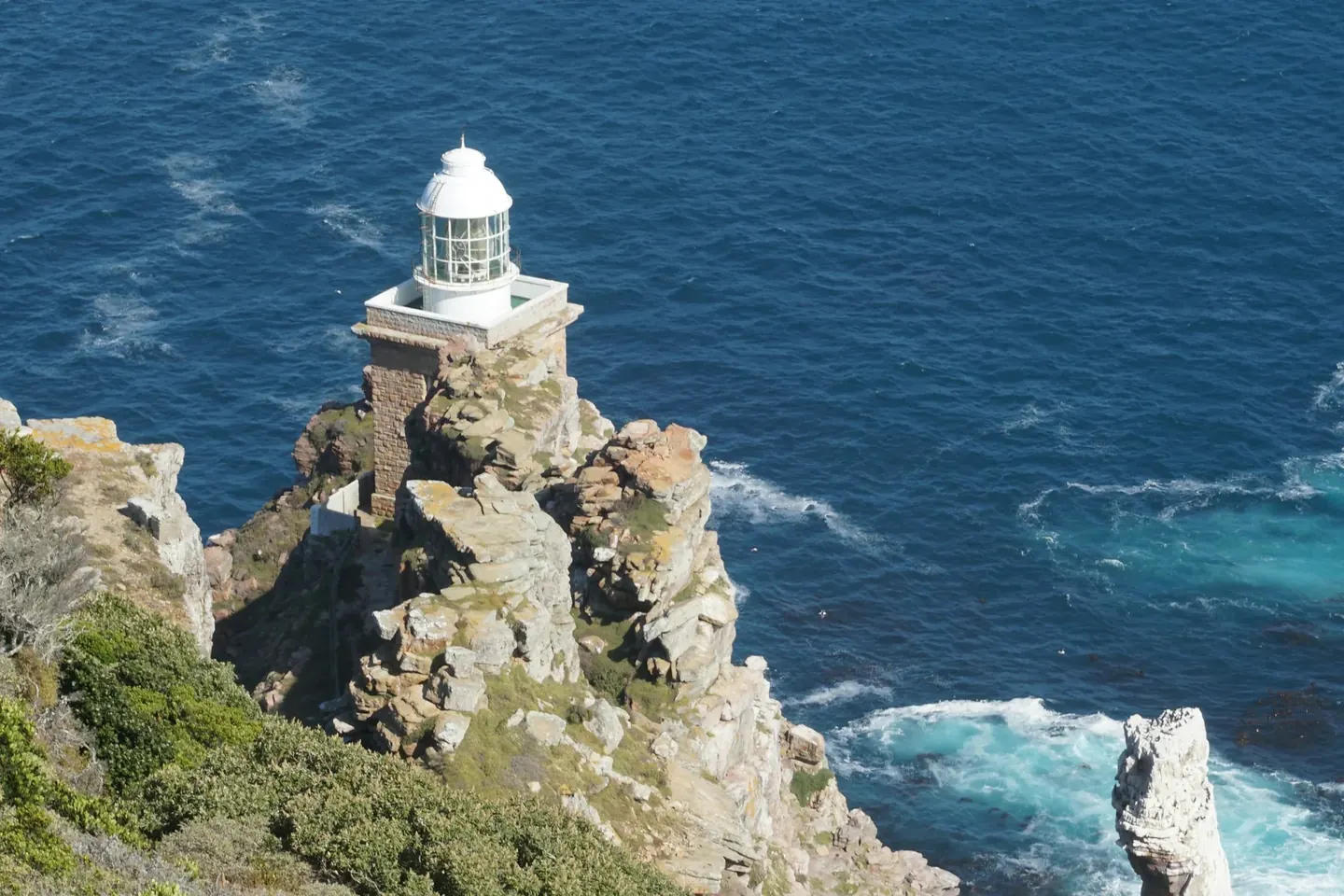
The old Cape Point lighthouse was built high above the sea. SANParks dates the circular cast-iron structure to 1860 and places it about 262 metres above sea level. The light had one flash every twelve seconds and a listed range of 32 nautical miles. Yet height and range did not make it an ideal aid in every condition. SANParks says the tower was often covered by cloud, reducing its visibility to ships, and that it was struck by lightning. A second lighthouse was therefore built lower at Diaz Point and commissioned in 1919.
A high light above a difficult coast
In many locations, raising a light can help it be seen over the horizon or over nearby land. But the Cape Point account shows why a higher position is not automatically better. If a high lantern sits in cloud, its light can be obscured from ships below. The issue is not whether a tall lighthouse is inherently flawed; it is whether the chosen elevation and local weather together provide the visibility needed for the aid's purpose. Cape Point's old light made that question visible in its daily operation.
Cloud was not the only problem
SANParks identifies two reasons a new light was needed. The original location was often cloud-covered, which reduced visibility to ships, and the tower was struck by lightning. These are related in that both affect reliability, but they are not the same engineering problem. Cloud obscures a visible signal from an observer; lightning threatens the structure or equipment. The official summary does not quantify how often either happened or provide a complete incident log, so the evidence supports the stated problems but not a frequency estimate.
A lower station at Diaz Point
The replacement lighthouse was a nine-metre square masonry tower with a white lantern house. SANParks says it was commissioned in 1919 at Diaz Point, in a lower and more visible position closer to sea level. Its design was intended to withstand extreme coastal conditions. This was not simply a shorter copy of the old lighthouse. It was a different structure placed at a different point to address the earlier station's visibility and reliability problems.
Two light characters, two signaling patterns
The old light showed one flash every twelve seconds. SANParks describes the new light as a composite group flashing three times every thirty seconds. These patterns make the two stations distinguishable in a light list and to observers who can see them. The new light also includes a fixed red sector light, which SANParks says marks dangerous areas off the point. The group flash and the sector do different work: one identifies the character of the main light, while the fixed colored sector communicates a directional warning.
The old tower did not disappear
Once the new lighthouse was commissioned, the older structure was repurposed as a watch room and later developed as a visitor attraction, according to SANParks. The old station's history therefore continued after its original navigational role changed. This is a useful distinction in lighthouse heritage: a tower may stop being the primary operational aid while remaining part of a site's working or interpretive landscape. Cape Point now preserves both structures, making the relocation itself visible to visitors.
What the change teaches about lighthouse siting
The case also shows the importance of treating reliability as a combination of conditions. A light's value depends on the signal, the structure, its weather exposure and the mariner's line of sight. No single number captures all of those factors. Cape Point's move did not discard height as a useful design feature; it changed the site to address a local problem. When an aid fails to meet its operational need, the solution may involve relocation, a new structure, a changed characteristic or several changes at once.
Build a comparison with the right vertical measurements
A useful sketch has separate labels for tower height, lantern elevation and local cloud exposure. A short tower on a cliff can place its lamp higher than a tall tower near sea level. The word “lower” should therefore identify the light's position, not simply the height of its building.
For a hypothetical design review, hold the lamp specification constant while comparing two sites. Then ask which observations would establish obscuration at each: a dated weather record, a report from a known observer position or repeated observations under stated conditions. Next consider equipment changes separately. Altering site and lamp together may improve service, but does not isolate the contribution of either change.
This exercise explains why the Cape Point story is more than an argument for building short towers. It is an example of revising a location in response to documented limitations. The park's concise account supplies the historical outline; it does not supply a probability that any future vessel will see the replacement under particular conditions.